
Unveiling the Soul of Africa: A Journey Through African Art
African art blends ancient symbols with modern innovation. Journey through masks, textiles, and sculptures that define cultures from Mali to Madagascar.
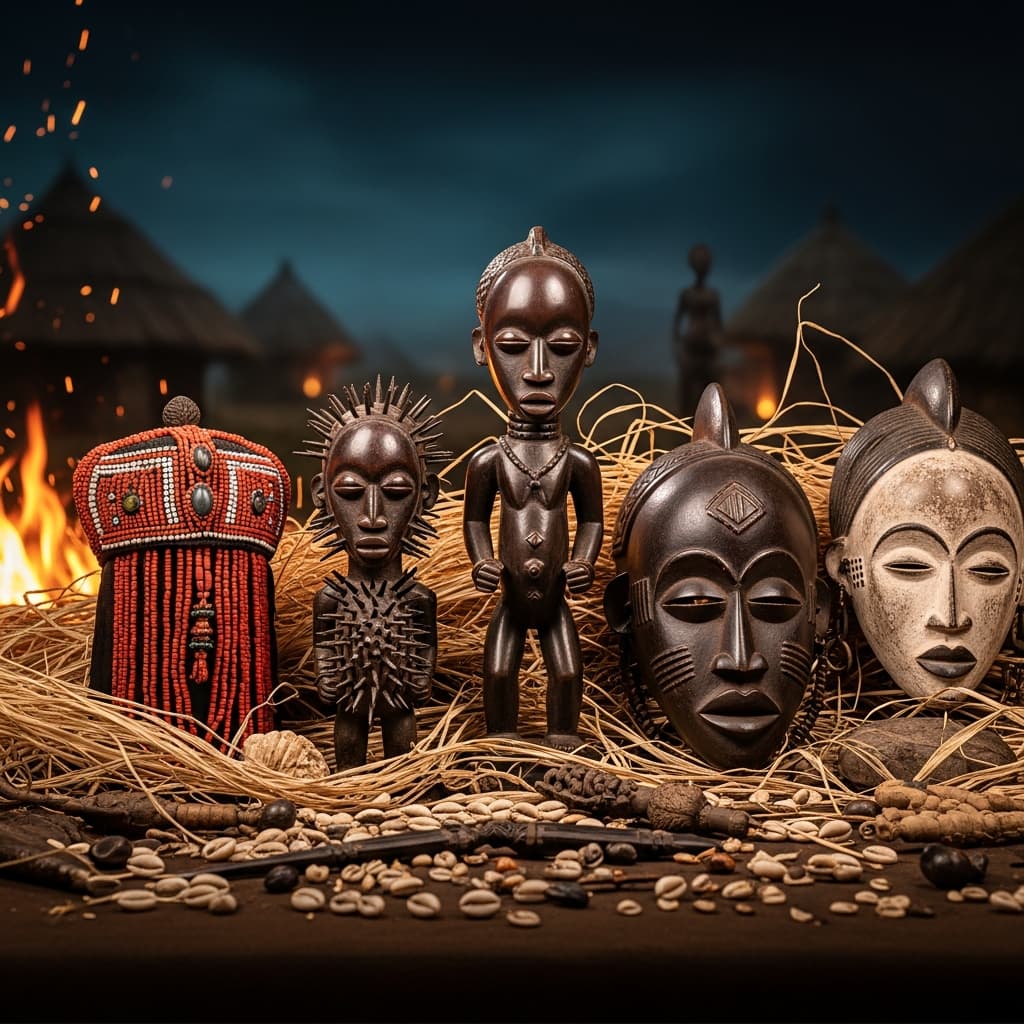
Picture a massive baobab tree carved into a storytelling throne, its surface alive with symbols of ancestors, harvests, and spirits. Or envision a Yoruba beaded crown shimmering with colors that whisper royal authority. African art is not just objects on display. It is a living language of culture, history, and identity. From ancient rock engravings to contemporary installations in global galleries, this art form captures the continent’s diversity across 54 nations and thousands of ethnic groups. Whether you’re planning a trip to Benin’s bronze palaces or learning Swahili through mask-making workshops, African art invites you to see the world through vibrant, symbolic eyes.
Spanning millennia, African art blends functionality with spirituality, using materials from earth, wood, and metal. It influences modern masters like Picasso and Basquiat while powering cultural tourism and education today. Dive in, and you’ll discover how masks dance, sculptures speak, and textiles tell tales.
The Rich History of African Art: From Prehistory to Global Influence
African art dates back over 70,000 years, with ochre pigments found in South Africa’s Blombos Cave used for body painting and engraving. Rock art in the Sahara, from 12,000 BCE, depicts hunters, cattle, and mystical figures, offering glimpses into ancient beliefs. By 500 BCE, Nok terracotta figures in Nigeria showcased advanced sculpting, with expressive faces that hinted at portraiture.
Great kingdoms elevated the craft. The Benin Kingdom (13th–19th century) produced intricate bronze plaques and heads using lost-wax casting, commemorating kings and battles. Ife’s naturalistic zinc-brass heads (12th–15th century) portrayed royalty with striking realism. In East Africa, Swahili coastal cities traded ivory carvings with India and China. The Mali Empire’s Great Mosque of Djenné inspired mud-cloth architecture, while Kongo nail fetishes (nkisi) channeled spiritual power.
Colonialism disrupted traditions, looting treasures like Benin bronzes, now in museums worldwide. Yet, artists adapted. 20th-century independence sparked revival: Nigeria’s Oshogbo movement blended Yoruba myths with modern painting. As UNESCO highlights, traditions like Mali’s Yaaral and Degal festivals preserve art in performance, ensuring continuity.
Core Elements: Materials, Styles, and Symbolic Depth
African art thrives on natural materials. Wood dominates masks and figures, carved from iroko or ebony for durability. Metals like bronze, brass, and iron create regal items, while clay forms pottery and terracotta. Textiles, from Mali’s bogolanfini mud cloth to Ghana’s kente weaves, use cotton dyed with plants. Beads, shells, and feathers add color and status.
Styles vary by region but share abstraction and symbolism. Faces are often stylized, emphasizing essence over realism. Asymmetry, bold patterns, and proportion distortions convey power or fertility. Masks transform wearers into spirits during rituals, while sculptures serve as altars or ancestors.
Functionality rules: art heals, protects, educates. A Dogon door lock is both security and cosmology lesson. Colors carry meaning: white for purity, red for life force. This depth makes African art a visual philosophy.
Regional Masterpieces: A Tour of Iconic Styles and Traditions
Africa’s art reflects its geography and peoples. Let’s explore key regions.
West Africa: Power, Prestige, and Spiritual Innovation
Nigeria leads with Yoruba gelede masks honoring women’s power, featuring elaborate headdresses. Benin’s court art includes ivory salt cellars exported to Europe. Ghana’s Ashanti goldweights, tiny brass figures, measured trade and proverbs. Mali’s Dogon sculptures, with raised arms, symbolize prayer. Senegal’s Sufi-inspired glass paintings blend Islamic calligraphy with local scenes.
Central Africa: Dynamic Forms and Ancestral Connections
Congo’s Luba bowstands and stools embody female leadership. Kuba velvet textiles use raffia and geometric patterns fit for kings. Fang reliquary figures guarded ancestor bones, their serene faces influencing Cubism.
East Africa: Trade, Islam, and Coastal Elegance
Swahili doors in Lamu, Kenya, feature brass studs and carvings blending Arab, Indian, and Bantu motifs. Maasai beadwork signals age and status. Ethiopia’s illuminated manuscripts and crosses merge Christian iconography with ancient styles. Explore coastal trade’s impact in this Malegado guide to Swahili civilization.
Southern Africa: Rock Art, Beadwork, and Urban Expression
San rock paintings in Drakensberg depict trance dances, some 4,000 years old. Ndebele house painting uses bold geometry for identity. Zimbabwe’s Shona stone sculptures, smooth and flowing, sell globally. Township art from Soweto turns apartheid scars into vibrant murals.
North Africa: Ancient Echoes and Islamic Geometry
Egypt’s pharaonic reliefs set global standards. Morocco’s zellige tiles create hypnotic mosaics. Berber jewelry and carpets carry protective symbols across the Maghreb.
Why African Art Matters Today
African art drives economies and pride. Nigeria’s Nollywood and Kenya’s art fairs boost tourism. Contemporary stars like El Anatsui (Ghana) repurpose bottle caps into metallic tapestries, exhibited at the Venice Biennale. Yinka Shonibare’s batik-clad sculptures critique colonialism. Art preserves endangered languages: Adinkra symbols from Ghana encode Akan proverbs.
Globally, it inspires fashion (Vlisco wax prints) and design. Museums return looted works, fostering reconciliation. For youth, workshops teach heritage, countering urbanization’s pull. As National Geographic reports, Africa’s creative industries grow faster than any region, employing millions.
Practical Guide: Experiencing and Learning African Art
Ready to engage? Visit Lagos’ Nike Art Gallery for workshops in batik or beadwork. In Marrakesh, tour the Maison de la Photographie for Berber portraits. Online, Google Arts & Culture offers virtual tours of Benin bronzes. Try sketching Adinkra symbols or weaving kente patterns via YouTube. Pair with language: learning Yoruba helps decode gelede lyrics, French unlocks Senegalese sous-verre art.
Travel tips: Bargain ethically at Dakar’s Marché Sandaga. Photograph respectfully during festivals. Support cooperatives like South Africa’s Ardmore Ceramics. Download apps tracing rock art trails in Tanzania.
How Malegado Brings African Art to Life Through Language
Malegado merges culture and learning seamlessly. Study French to read labels at Dakar’s IFAN Museum or Portuguese for Angolan semba-inspired sculptures. Our tutors explain Dogon cosmology in context, while community forums share mask-making videos. Discover how trade shaped Swahili doors in our cultural deep dives. Need to translate art terms across languages? See this Malegado article on reliable French-Portuguese translators. From lessons to virtual museum chats, Malegado makes African art your classroom.
Embrace the Canvas of Africa
African art is a bridge between past and future, rural and urban, spiritual and everyday. It teaches us that beauty serves purpose, and creativity heals. Whether you collect a Shona sculpture, dance at a Benin festival, or sketch San motifs, let this art awaken your senses. Start exploring on Malegado today, where every symbol tells a story, and every language opens a gallery.