
Threads of Identity: The Living Canvas of African Cultural Art
African cultural art binds community in cloth, bead, and mud. Journey through kente proverbs, bogolan fertility, and Ndebele geometry that shape daily life.
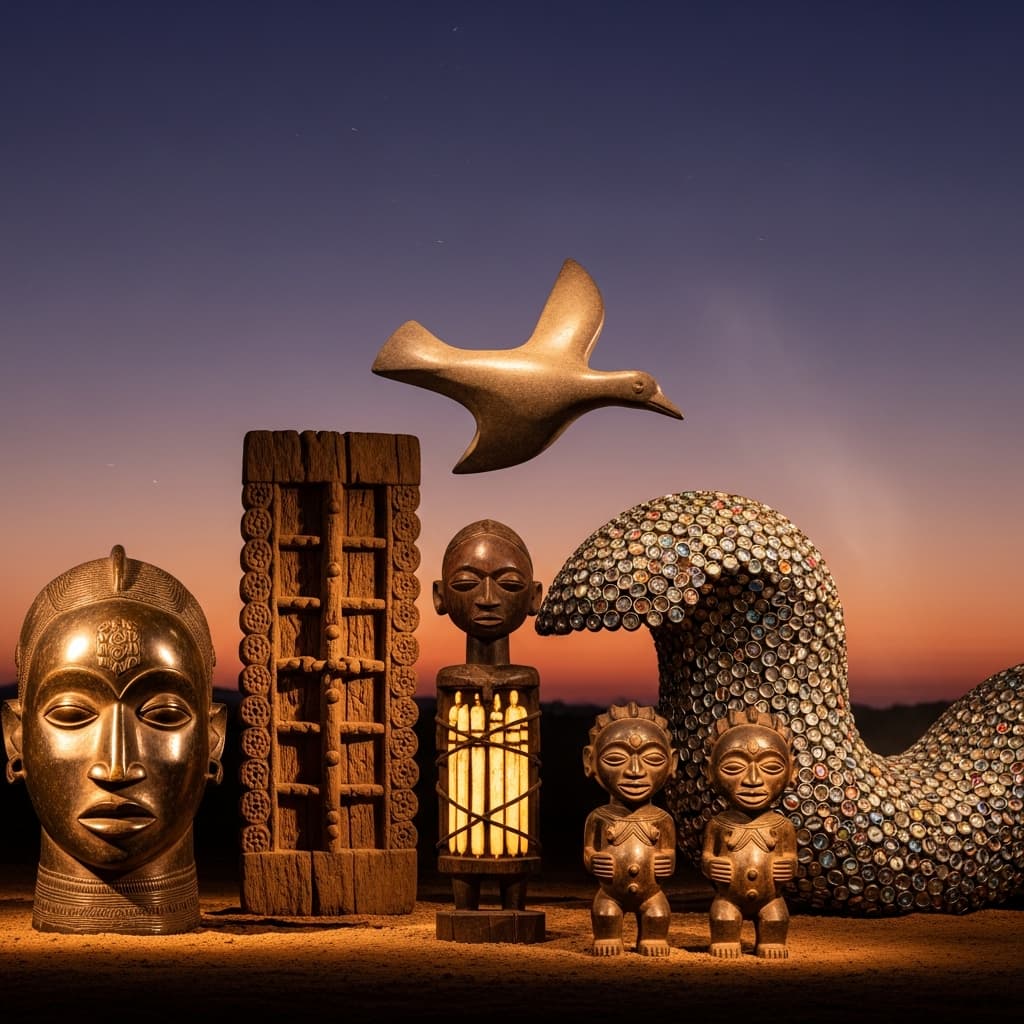
Touch a strip of kente cloth from Ghana and feel the woven proverbs gold for wealth, black for maturity speaking through every thread. African cultural art is not museum relic. It is daily breath, ritual heartbeat, social glue. From Adinkra stamped funeral cloth in Côte d’Ivoire to Ndebele house murals blazing geometry in South Africa, this art binds over 3,000 ethnic groups across 54 nations. Whether you’re learning Akan through goldweight miniatures or joining a Dogon mask festival in Mali, African cultural art wraps you in story, status, and spirit.
Handcrafted from mud, bead, bronze, fiber, and pigment, cultural art serves birth, marriage, death, and harvest. It inspired global fashion, design, and activism. Let’s thread the needle through time and meaning.
Roots in Ritual: Ancient Foundations (10,000 BCE – 1000 CE)
Art begins with purpose. Blombos Cave (South Africa, 77,000 BCE) ochre kits mix pigment for body painting early cosmetics and symbolism. Sahara rock art (8000 BCE) shows adorned dancers with feather headdresses. Nok terracotta (Nigeria, 500 BCE) sculpts beaded necks and scarification status markers still used today.
Great Zimbabwe (11th century) carves soapstone birds atop walls royal emblems echoing in modern flags. Swahili coral houses (Lamu, 13th century) embed Chinese porcelain as prestige. Kongo yombe maternity figures cradle infants, teaching lineage. Explore coastal fusion in this Malegado Swahili civilization guide.
Kingdoms of Craft: Classical Splendor (1000–1800 CE)
Empires elevate art to diplomacy. Benin bronzes cast Portuguese soldiers proof of global contact. Ashanti kente weaves 300+ patterns, each naming a proverb. Yoruba beadwork crowns kings in coral regalia. Dogon doors carve eight primordial ancestors cosmic blueprints. Akan goldweights cast spiders (Ananse wisdom) in brass for trade and teaching.
Mali’s bogolanfini mud cloth dyes fertility symbols with fermented earth. Berber carpets knot protective eyes against evil. Fulani amber beads signal marriageability across the Sahel.
Colonial Shadows & Creative Resistance (1800–1960 CE)
Looters strip palaces4,000 Benin works vanish to Europe. Missionaries ban “pagan” masks, yet artists hide nkisi in forests. Makonde carve “shetani” spirits for export surreal income. Ndebele women paint bold house facades defiant beauty under apartheid.
Poto-Poto painters (Congo) depict market vibrancy on sackcloth. San elders pass rock art lore orally as sites fade.
Independence & Global Bloom (1960–2000 CE)
Freedom sparks revival. Senegal’s tapestry school weaves négritude poetry. Shona stone flows into modernist birds and families. Oshogbo prints Yoruba gods in batik. Nsukka uli revives Igbo body painting on canvas.
Kente hits world runways via Kwame Nkrumah. Bogolan inspires Chris Seydou couture. Adinkra symbols brand Ghanaian independence.
Contemporary Pulse: Markets, Messages, Activism (2000–Today)
Cultural art commands $500 million+ yearly. El Anatsui drapes bottle caps into metallic kente $2 million sales. Esther Mahlangu paints BMWs in Ndebele geometry. Romuald Hazoumè crafts petrol-can masks satirizing oil politics.
Afrofuturist jewelers 3D-print Adinkra in gold. Nubuke Foundation (Ghana) trains 500 youth in kente annually. Restitution returns France sends 26 Dahomey works in 2021. As CNN Style reports, Lagos auctions rival London.
Art preserves language Adinkra encodes Akan; nsibidi whispers Igbo. It heals imigongo panels mend Rwandan trauma.
Forms & Functions: A Cultural Art Lexicon
- Textiles: Kente (strip-woven prestige), bogolan (mud-dyed fertility), asafo flags (Fante military appliqué).
- Beadwork: Yoruba crowns, Zulu love letters, Maasai collars.
- Body Art: Himba otjize paste, Karo scarification, Wodaabe makeup contests.
- Architecture: Ndebele murals, Kasbah clay, Dogon togu na.
- Miniatures: Akan goldweights, Baule blolo bla spirit spouses.
Regional Signatures: An Art Atlas
West Africa: Cloth & Court
Ghana: Kente, adae gold swords.
Nigeria: Yoruba iroko doors, Igbo mbari houses.
Mali: Bogolan, chi wara bamboo headdresses.
Central Africa: Power & Prestige
Congo: Kuba ntady velvet, Luba lukasa memory boards.
Cameroon: Bamun bronze pipes.
East Africa: Trade & Transition
Kenya: Maasai enkarewa earrings. Ethiopia: Coptic processional crosses. Tanzania: Tingatinga enamel boards.
Southern Africa: Stone & Statement
South Africa: Ndebele isiphepelo murals.
Zimbabwe: Shona family trees.
North Africa: Knots & Geometry
Morocco: zellige tiles, Berber amazigh tattoos.
Why African Cultural Art Matters Today
· It fuels identity kente at graduations, bogolan in diaspora fashion.
· Tourism earns $2 billion Djenné’s mud-cloth market alone.
· Sustainability grows organic dyes, recycled beads.
· Youth learn heritage Lagos’ Nike Art Centre trains 1,000 yearly.
· Activism speaks Hazoumè masks protest pollution.
· Global design borrows Vlisco wax prints, IKEA kuba cushions.
Hands-On Guide: Touch, Make, Wear
Start small. Stamp Adinkra with cassava on cotton.
· Weave paper kente strips. Watch Ndebele mural tutorials.
· Travel? Shop Accra’s Arts Centre, sleep in Dogon campements, bid at Cape Town Art Fair.
· Wear culture ankara dresses, tuareg silver.
· Pair with language Twi proverbs in Adinkra.
· Use apps like Africa Fashion Guide.
How Malegado Weaves Art into Fluency
· Malegado turns craft into curriculum.
· Study French for bogolan dye recipes.
· Learn Portuguese for Angolan samakaka cloth.
· Tutors decode Adinkra in Akan. Forums share Ndebele color theory.
· Translate pattern names across tongues via our French-Portuguese translator guide.
· From virtual loom sessions to proverb-through-print lessons, Malegado stitches your path.
The Cloth Still Speaks
African cultural art is conversation one kente thread, one bogolan stroke, one Ndebele line, and identity breathes. Start weaving on Malegado today. The loom is ready.