
The Taj Mahal: Unveiling India's Monument to Love and History
More Than Marble and Symmetry The Taj Mahal is one of the most recognizable landmarks in the world, a jewel of Mughal architecture, and India’s must visited.
More Than Marble and Symmetry
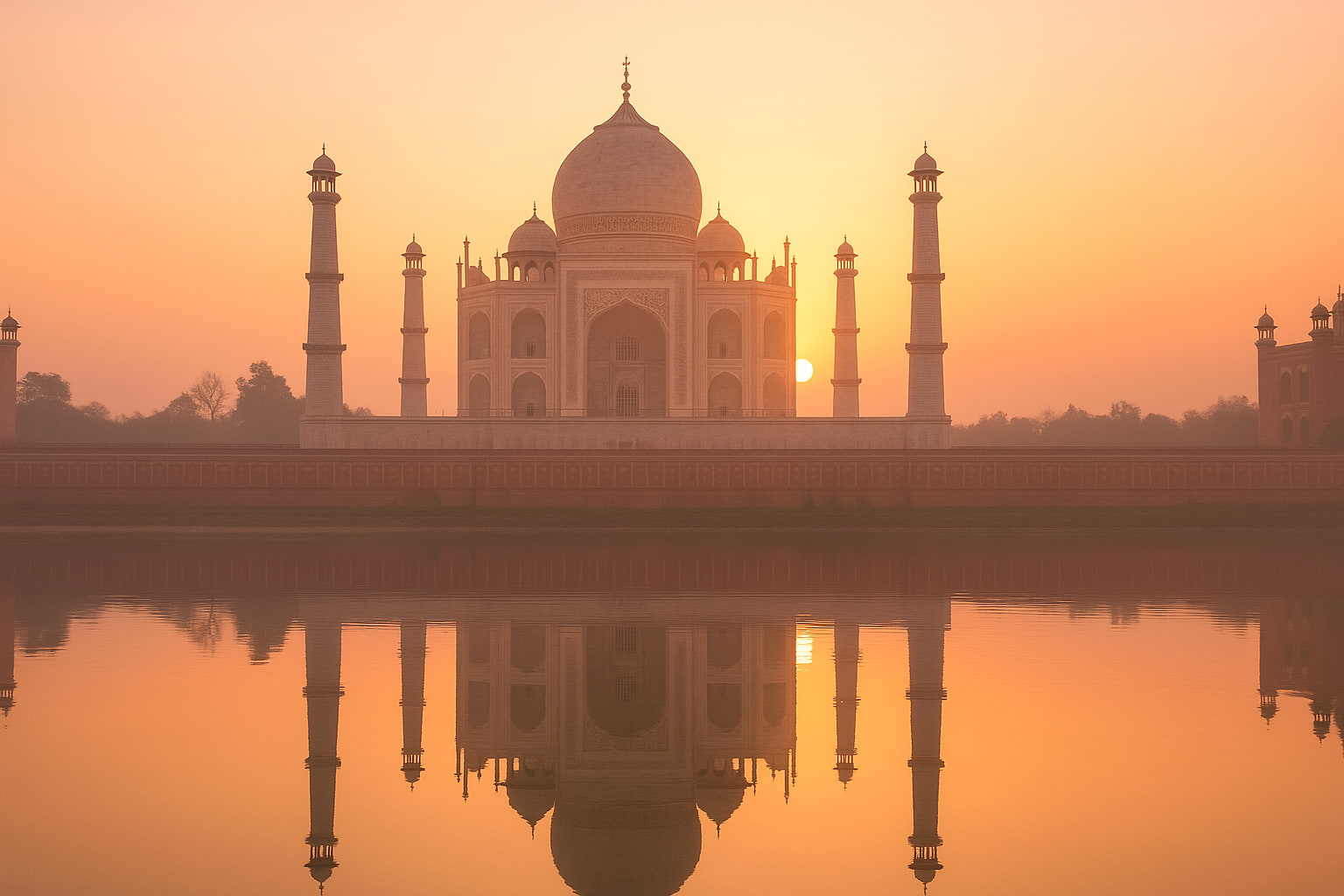
The Taj Mahal is one of the most recognizable landmarks in the world, a jewel of Mughal architecture, and India’s most visited monument. Each year, around 7–8 million people from India and abroad walk through its gates to witness its white marble perfection. Located in Agra, in the northern state of Uttar Pradesh, it sits on the banks of the Yamuna River and is more than just a building it’s a monument to love, a symbol of India’s rich history, and a masterpiece that blends art, science, and cultural identity.
Designated a UNESCO World Heritage Site in 1983, the Taj Mahal stands as a reminder of the Mughal Empire’s golden age and its architectural innovations. For India, it’s not just a tourist attraction it’s a national treasure, a global cultural icon, and one of the most photographed structures in human history.
The History: A Love Story Cast in Stone
The Taj Mahal’s story begins in 1631, during the reign of Mughal Emperor Shah Jahan. His wife, Mumtaz Mahal, died giving birth to their 14th child. Devastated by her death, Shah Jahan set out to build a mausoleum unlike any the world had ever seen a monument that would immortalize her memory.
Construction began in 1632 and took over 20 years, employing around 20,000 artisans, architects, stonecutters, calligraphers, and laborers. Materials came from across Asia: white marble from Makrana in Rajasthan, jasper from Punjab, jade and crystal from China, turquoise from Tibet, lapis lazuli from Afghanistan, and sapphires from Sri Lanka. Elephants said to number over a thousand transported these materials to the site.
The result was an architectural masterpiece blending Persian, Islamic, and Indian design elements. The central dome, flanked by four minarets, is perfectly symmetrical. The main tomb houses the cenotaphs of Mumtaz Mahal and Shah Jahan, though their actual graves lie in a lower chamber. Surrounding the mausoleum are expansive gardens, reflecting pools, and red sandstone buildings, all designed with geometric precision.
Cultural and Historical Significance
The Taj Mahal isn’t just an architectural wonder it’s a symbol of eternal love, imperial power, and artistic achievement. During the Mughal era, monumental architecture was a statement of legitimacy and prestige, and the Taj Mahal demonstrated the empire’s wealth, stability, and devotion to Islamic art traditions.
It also represents the fusion of cultures that defined Mughal India, where Persian aesthetics met Indian craftsmanship and technology. Calligraphy of Quranic verses decorates the marble, inlaid with semi-precious stones in a technique known as pietra dura. The gardens follow the charbagh style, symbolizing paradise as described in Islamic tradition.
Today, the Taj Mahal is central to India’s tourism economy, drawing millions of visitors from across the world and generating significant revenue for Agra. For the Indian diaspora, it’s a cultural touchstone, an instantly recognizable emblem of heritage and pride.
Key Things to Know Before You Go
Location: Agra, Uttar Pradesh, India about 200 km (125 miles) from New Delhi.
Best Time to Visit: October to March for cooler weather; sunrise and sunset are the most photogenic times.
Languages: Hindi and English are commonly used in the area.
Entry Rules: Tickets are cheaper for Indian citizens than for international visitors; night viewing is available on full moon nights (except Fridays and during Ramadan).
Security: Bags are checked, and certain items like food, tripods, and drones are prohibited.
Dress Comfortably: Wear light clothing in summer and carry a scarf or shawl for modesty in religious areas.
Footwear: Shoe covers or removal is required before entering the main mausoleum.
Photography: Allowed in most areas, but not inside the main tomb chamber.
Crowds: Expect heavy crowds during holidays and weekends.
Environmental Efforts: The area has restricted vehicle access to protect the monument from pollution damage.
Myths and Legends of the Taj Mahal
The Taj Mahal has inspired countless myths some romantic, others dark or outright false.
1. The Black Taj Mahal A popular legend claims Shah Jahan planned to build a black marble twin of the Taj across the Yamuna River as his own tomb. While archaeologists found blackened marble ruins opposite the Taj at Mehtab Bagh, most historians believe they were part of a garden, not a “Black Taj.”
2. Amputations of the Artisans One of the most dramatic myths says Shah Jahan ordered the hands of the craftsmen cut off so they could never replicate the Taj’s beauty. While widely told, there’s no historical evidence for this story it likely grew from the monument’s mythical aura.
3. A Teardrop in the Sky The Taj has been called a “teardrop on the cheek of time” by poet Rabindranath Tagore a poetic metaphor that has become part of its lore, reinforcing its romantic identity.
4. Changing Colors Visitors often claim the Taj changes color depending on the time of day: pinkish in the morning, dazzling white in the afternoon, and golden under moonlight. This is true thanks to the translucent quality of Makrana marble and the angle of sunlight.
The Wow Factor: Why It Leaves You Speechless
The Taj Mahal’s magic lies in more than just its appearance it’s in the experience of seeing it in person. As you pass through the main gate, the mausoleum reveals itself in perfect symmetry, framed by dark red sandstone. The reflecting pool mirrors the domes and minarets, creating a surreal sense of harmony.
Architecturally, it’s a triumph of proportion. The central dome rises 73 meters (240 feet), appearing both massive and delicate. The minarets are slightly tilted outward so that, in the event of an earthquake, they would fall away from the main structure. Intricate marble inlay work features flowers, vines, and calligraphy, each carved with microscopic precision.
The gardens provide a sense of peace, designed to symbolize paradise. The sound of the Yamuna River in the distance, the cool marble under your hands, and the scent of blooming flowers in spring all combine to make the Taj an immersive sensory experience.
Seeing it at sunrise, when the first light hits the dome, or under a full moon when the marble glows ethereal white, is unforgettable. It’s no wonder visitors often leave describing it as “more beautiful than any photograph.”
Final Thoughts
The Taj Mahal is more than an architectural achievement it’s a cultural symbol, a love story, and a work of art that has stood for nearly 400 years. Its beauty comes not only from its marble and symmetry but from the emotions it embodies and the stories it holds. Whether you’re a historian, a romantic, or simply a traveler looking for wonder, the Taj Mahal delivers an experience that lingers long after you leave.
It’s a reminder that art can make history tangible, love timeless, and even grief beautiful. The myths only add to its mystery, but the reality is already magical enough.