
The Heartbeat of Africa: Exploring African Drumming
African drumming speaks in tones and thunder. Journey through djembe, sabar, and ngoma traditions that drive dance, healing, and history.
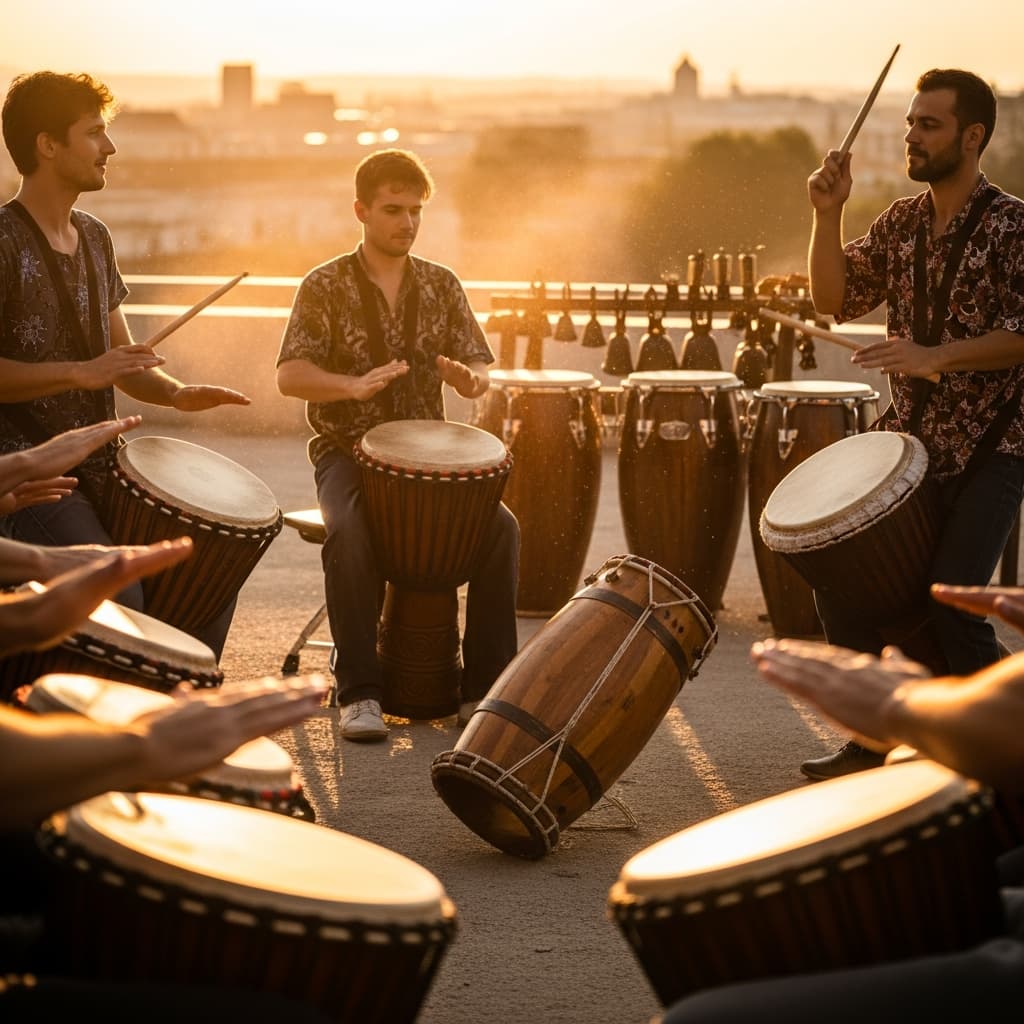
Hear the deep, rolling boom of a djembe slicing through village air, answered by the sharp crack of a tama talking drum that mimics human speech. African drumming is not background noise. It is conversation, celebration, prayer, and power. From the thunderous fontomfrom ensembles of Ghanaian kings to the hypnotic ngoma rhythms of East African weddings, drums pulse across 54 countries and over 3,000 ethnic groups. Whether you’re learning Wolof through sabar beats or planning a drum circle in Senegal, African drumming invites you to feel culture in your bones.
Hand-carved from wood and skin, tuned with ropes and fire, drums send messages, heal spirits, and drive dances. They birthed jazz, rock, and hip-hop. Let’s strike the skin and trace the rhythm.
Ancient Echoes: The 40,000-Year Roots of African Drumming
Drumming begins with breath and earth. South Africa’s bone flutes (40,000 BCE) prove early rhythm. By 6000 BCE, Sahara rock art shows frame drums in ritual circles. Egyptian tomb paintings (2500 BCE) depict barrel drums and sistrums for goddess worship.
Bantu migrations (1000 BCE–1000 CE) carry slit drums and xylophones south. Mali Empire griots master the tama to narrate epics. Yoruba dundun drums “talk” in tonal language by 1000 CE. Ashanti fontomfrom massive barrel drums on carved stools announce royalty. Trade brings ouds to Swahili coasts, blending with local ngoma.
Colonial bans silenced public drumming, yet it survived in secret. Post-independence, Fela Kuti fused afrobeat with talking drums. UNESCO recognizes Jembe drumming of the Malinké as intangible heritage.
Drum Families: Shapes, Sounds, and Spirits
Drums speak in categories.
Membranophones: Skin That Sings
- Djembe (Mali/Guinea): Goblet shape, goat skin, three tones bass, tone, slap.
- Tama (Wolof): Hourglass, squeezed under arm to change pitch talks in Wolof.
- Sabar (Senegal): Tall, single-headed, played with hand and stick for mbalax.
- Ngoma (East/Southern Africa): Barrel or conical, powers indlamu and jerusarema.
Idiophones: Wood That Resonates
- Slit drums (Central Africa): Hollowed logs with slits, send signals miles away.
- Balafon (West Africa): Xylophone with gourd resonators, precursor to marimba.
Ensembles: Layers of Conversation
Fontomfrom (Ghana): 7+ drums, bells, rattles for royal processions. Djembe orchestra: Lead kenkeni, mid sangban, solo djembe.
Tuning uses fire, pegs, or paste. Skins goat, cow, antelope age with palm oil for depth.
Regional Rhythms: A Drumming Atlas
Each zone has signature beats.
West Africa: Speech and Social Fire
· Mali: Jembe drives bamana harvest rites.
· Senegal: Sabar women lead with hip-shaking bakks.
· Nigeria: Dundun ensemble “speaks” Yoruba proverbs.
· Ghana: Kpanlogo youth drums blend highlife.
· Central Africa: Groove and Guitar Sync
· Congo: Lokole slit drums set soukous tempo. Cameroon: Bikutsi uses shaker and drum for women’s power.
East Africa: Circle and Celebration
· Tanzania: Ngoma drums layer sindimba for weddings
· Kenya: Bungoma barrel drums back Luo ohangla.
Southern Africa: Boots and Resilience
· South Africa: Gumboot turns rubber boots into percussion.
· Zimbabwe: Mbira + drum cycles for jerusarema.
North Africa: Frame and Trance
· Morocco: Bendir frame drum pulses gnawa healing.
· Egypt: Tabla clay goblet drives shaabi.
Why African Drumming Matters Today
· Drums heal and unite.
· Djembe therapy reduces PTSD in Rwanda.
· Sabar festivals boost Senegal’s $1 billion tourism.
· Globally, Paul Simon’s Graceland introduced mbube beats.
· Beyoncé sampled makossa drums.
· Artisans thrive Guinea’s Keita family trains 100 drummers yearly.
Youth programs in Soweto teach gumboot to combat gangs. As BBC Music notes, African polyrhythms birthed rock’s backbeat.
Drums preserve language tama tones mimic Wolof pitch. They fight cultural erosion in cities.
Hands-On Guide: Play, Learn, Travel
Start simple. Watch Mamady Keïta djembe tutorials on YouTube. Buy a shekere and shake to afrobeat. Join local drum circles many cities host sabar nights.
Travel? Drum at Mali’s Festival sur le Niger (January). Learn fontomfrom in Ghana’s Cape Coast. Record ngoma at Zanzibar’s Sauti za Busara.
Pair with language count in Bambara during jembe. Use apps like Drum Guru for patterns. Support fair-trade Africa Direct sells authentic tama.
How Malegado Turns Beats into Fluency
Malegado makes drumming your classroom. Study French to follow sabar calls in Dakar. Learn Portuguese for Angolan ngoma chants. Tutors teach dundun Yoruba speech. Forums share balafon tabs. Explore trade’s drum routes via this Malegado Swahili civilization guide. Translate rhythm names across tongues with our French-Portuguese translator article. From virtual jam sessions to festival planning, Malegado keeps you in rhythm.
Feel the Pulse
African drumming is the continent’s heartbeat one djembe slap, one tama phrase, one ngoma roll, and you’re alive with 40,000 years of story. Start beating on Malegado today. The drum is calling.