
 App Store
 Google Play
The German Language (Deutsche Sprache): History, Importance, and Global Influence
The German language (deutsche Sprache) has a long and fascinating history, from ancient tribes to modern Europe. Explore its cultural influence and global role.
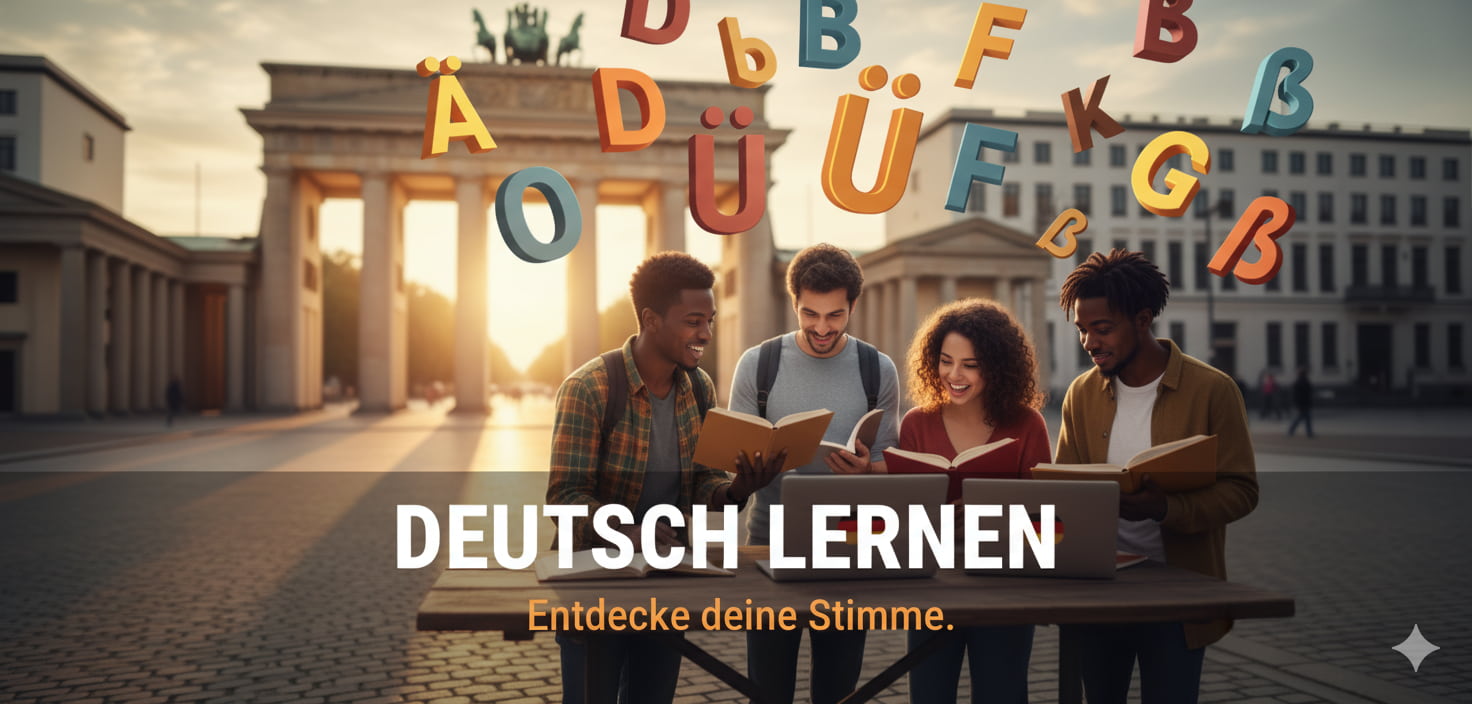
The German language, or deutsche Sprache, is one of the most significant languages in the world today. Spoken by more than 90 million native speakers and tens of millions of learners, it plays a vital role in European politics, commerce, science, and culture. But the story of the German language is much older and richer than many realize. To understand its present importance, it is necessary to trace its history, its role in culture, and why it remains so widely studied.
A Historical Journey of the German Language
The roots of the German language lie deep in the Indo-European language family. Over thousands of years, various dialects evolved into what is today recognized as German.
- Early Beginnings: Germanic tribes spoke forms of Proto-Germanic as early as 500 BCE. These tribes included the Saxons, Franks, Goths, and Alemanni, whose dialects laid the foundation of German.
- Old High German (500–1050): Marked the first written records of the language, including religious texts like the Hildebrandslied.
- Middle High German (1050–1350): The period of great literature, including the Nibelungenlied, which reflects the myths and cultural values of medieval Germans.
- Early New High German (1350–1650): Standardization began, especially influenced by Martin Luther’s translation of the Bible in 1522. Luther’s work unified German dialects into a more recognizable written form.
- Modern Standard German: Today’s German, standardized in grammar, vocabulary, and spelling, was influenced by centuries of regional variety and cultural exchange.
This long history reveals why German is sometimes described as complex. Yet its richness makes it a rewarding language to learn and study.
Cultural Importance of German
German is more than just a tool for communication. It reflects the culture and intellectual traditions of a people who have made a massive contribution to global civilization.
- Philosophy and Thought: German was the language of philosophers such as Immanuel Kant, Friedrich Nietzsche, and Martin Heidegger.
- Science and Research: Before English became the dominant scientific language, German was widely used in research publications.
- Music and Literature: Great composers like Beethoven, Bach, and Mozart wrote and performed in German-speaking regions, while authors like Goethe and Schiller shaped world literature.
Learning German means connecting with this intellectual and cultural legacy.
Why People Learn the German Language Today
In the modern world, German continues to hold great significance:
- Economics and Trade: Germany is the largest economy in Europe and the fourth-largest in the world. Knowledge of German opens doors in business, trade, and technology.
- Tourism and Travel: Millions visit Germany each year, from Berlin’s cultural scene to Bavaria’s castles. Speaking the language enhances these experiences.
- Education and Research: German universities are globally recognized, offering many programs for international students, often tuition-free or affordable.
Common Perception: “Deutsche Sprache, Schwere Sprache”
There is a saying in German: “Deutsche Sprache, schwere Sprache” (German language, difficult language). Many learners believe German is hard because of:
- Complex grammar with cases (nominative, accusative, dative, genitive).
- Long compound words, like Donaudampfschifffahrtsgesellschaftskapitän.
- Gendered nouns (der, die, das).
However, with modern tools and community support, learning German is more accessible than ever. Platforms like Malegado
Combine structured lessons, one-on-one practice, and community interaction to make learning smoother and more enjoyable.
Malegado: Your Gateway to German Language and Culture
For learners interested in German, Malegado provides a unique approach:
- Combines structured learning similar to Duolingo.
- Offers one-on-one practice with tutors, similar to Preply.
- Creates a community hub, where learners connect, practice, and share cultural knowledge.
- Rich cultural content about Europe, Africa, Asia, and beyond.
This makes Malegado the ideal place not only to learn languages but also to explore history and culture.
Example: After learning German, you can also explore cultural depth in other articles like the Sheikh Zayed Grand Mosque
or discover how languages intertwine with heritage in the Swahili Civilization
German in the Modern World
Today, German is:
- An official language in Germany, Austria, Switzerland, Luxembourg, and Liechtenstein.
- A recognized minority language in countries such as Italy (South Tyrol), Belgium, and Namibia.
- Spoken by communities of emigrants around the world, including the U.S., Canada, and South America.
According to UNESCO
Preserving and promoting languages like German ensures cultural diversity in a globalized world.
Conclusion
The Deutsche Sprache is not just another European language. It is a bridge to history, culture, science, and global opportunities. From medieval epics to modern research, German reflects a long tradition of thought and creativity.
Whether you want to connect with German-speaking communities, unlock business opportunities, or study in Europe, the journey begins with learning the language. And with tools like Malegado
Learners can combine structured lessons, personalized practice, and cultural exchange in one place.
So, is German really difficult? Perhaps. But as learners often discover, it is also one of the most rewarding languages you can ever master.