
Symbols of the Soul: The Enduring Power of African Tribal Art
African tribal art channels ancestors in wood, bead, and bronze. Journey through Makonde lipiko, Dogon nommo, and Yoruba ikenga that guard identity.
Kneel before a Baule spirit spouse figure from Côte d’Ivoire, its polished skin gleaming like moonlight on a river, and sense the quiet command of unseen forces. African tribal art is not souvenir. It is cosmology in wood, protection in bead, identity in iron. From the scarified masks of Makonde lipiko dancers in Tanzania to the nail-studded Kongo nkisi that heal or curse, tribal art breathes life into over 3,000 ethnic traditions across 54 nations. Whether you’re learning Igbo through mbari shrine murals or trekking to a Dogon cliff village, African tribal art pulls you into the sacred geometry of community.
Hand-forged, earth-dyed, ancestor-blessed, tribal art serves initiation, justice, fertility, and funeral. It seeded Cubism, fueled restitution debates, and now powers a $200 million contemporary market. Let’s trace the chisel marks of spirit and story.
Ancient Sparks: Pre-Tribal Foundations (10,000 BCE – 500 CE)
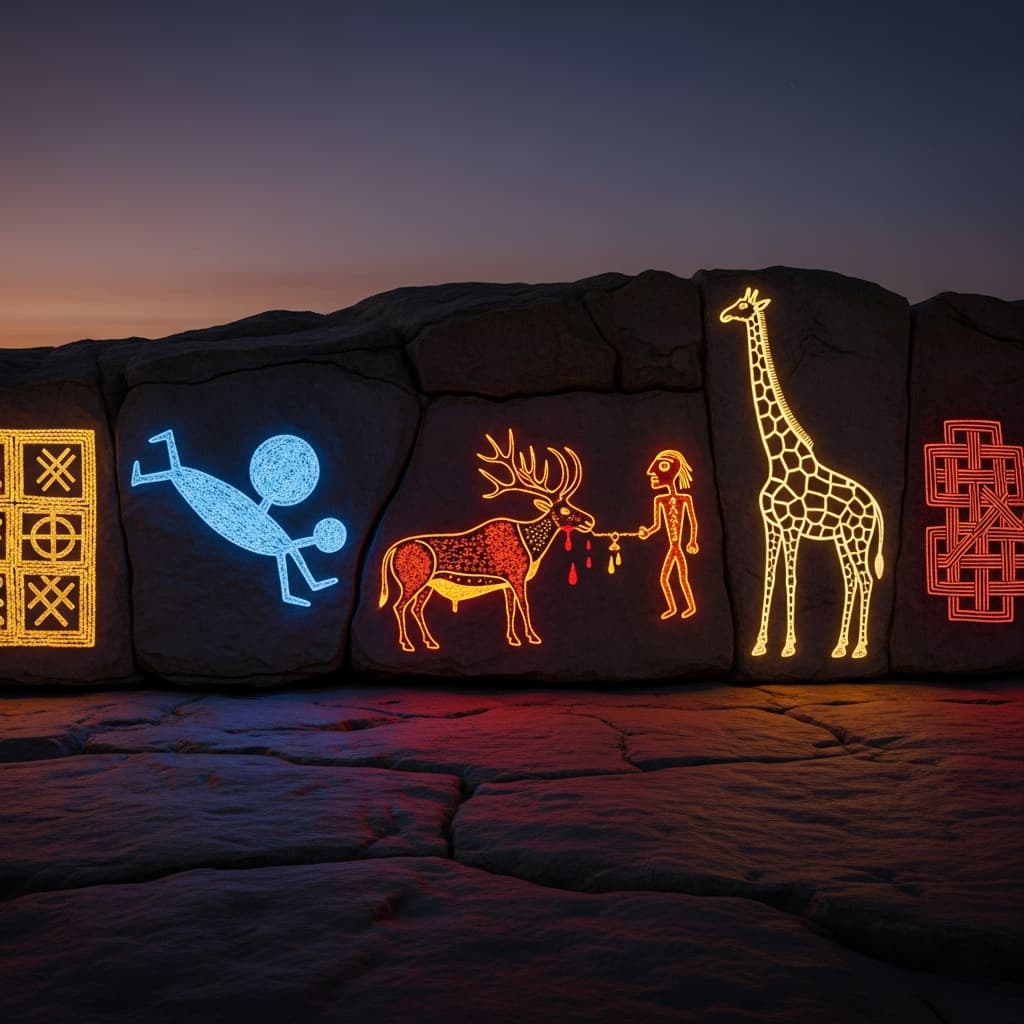
Art begins in ritual. Blombos Cave (South Africa, 77,000 BCE) ochre kits paint bodies for ceremony early tribal adornment. Sahara rock shelters (6000 BCE) show masked hunters with feather skirts. Nok culture (Nigeria, 1000 BCE) fires terracotta heads with tribal scarification status encoded in clay.
Djenné-Djeno (Mali, 250 BCE) yields iron spears and fertility dolls. Upemba (DRC, 500 CE) buries copper crosses tribal wealth markers. Egypt’s Kerma kingdom carves granite rams for clan shrines.
Tribal Kingdoms: Mastery & Meaning (500 CE – 1800 CE)
Clans crystallize into art empires.
- Ife (Nigeria, 1000 CE): Yoruba brass heads with vertical scars oduduwa lineage proof.
- Benin (13th century): Edo bronze plaques depict Oba warriors and Portuguese allies tribal diplomacy.
- Kuba (DRC, 17th century): Bushong velvet ntady panels map royal genealogy.
- Luba (DRC): Shankadi bowstands with female caryatids tribal leadership incarnate.
- Dogon (Mali): Tellem cave figures with raised arms nommo water spirits.
Akan goldweights cast sankofa birds tribal proverbs in brass. Chokwe mwana pwo masks mimic ideal womanhood for mukanda initiation.
Colonial Plunder & Hidden Continuity (1800–1960 CE)
Raids strip villages 1897 British sack Benin of 4,000 works. Missionaries burn “fetishes,” yet Fang reliquary figures hide in Gabon forests. Makonde carve shetani devils for export income. San elders whisper rock art lore as sites are fenced.
Pende (DRC) masks perform satire under Belgian eyes. Bamileke (Cameroon) spider beadwork crowns resist assimilation.
Independence & Revival (1960–2000 CE)
Freedom ignites pride. Zimbabwe Shona sculptors polish serpentine into family spirits. Oshogbo (Nigeria) prints Yoruba gods in adire. Makonde “tree of life” ebony twists clan into surrealism.
Nsukka (Nigeria) revives uli body painting on canvas. Bogolan mud cloth becomes négritude fashion. Asante kente crowns new presidents.
Global Pulse & Restitution (2000–Today)
Tribal art sells for millions Fang ngil mask hits $7.5 million (2006). El Anatsui reweaves bottle caps into tribal tapestries. Esther Mahlangu paints Ndebele geometry on BMWs.
Digital tribes: Kehinde Wiley re-crowns urban youth in tribal patterns. Restitution: Germany returns 22 Benin bronzes (2022). UNESCO safeguards Dogon mask dances and Yaaral/Degal festivals. As The New York Times tracks, 90% of tribal art sits outside Africa repatriation accelerates.
Art preserves language Adinkra stamps Akan wisdom; nsibidi encodes Igbo secrets. It heals nkisi treat PTSD in Congo clinics.
Forms & Functions: Tribal Art Lexicon
- Masks: Punu okuyi (Gabon maiden), Bwa butterfly (Burkina harvest).
- Figures: Baule blolo bian (spirit spouse), Songye nkishi (nail fetish).
- Textiles: Kuba raffia, Dogon indigo.
- Beadwork: Yoruba crowns, Zulu isicholo.
- Architecture: Mbari Igbo shrine houses, Kasena painted compounds.
Regional Icons: A Tribal Atlas
West Africa: Initiation & Authority
· Côte d’Ivoire: Senufo kpelie masks, Baule goli bull.
· Nigeria: Igbo ikenga horned shrines, Edo altar tusks.
Central Africa: Relics & Royalty
· Gabon: Fang byeri boxes.
· Cameroon: Bamum buffalo thrones.
East Africa: Helmets & Heritage
· Tanzania: Makonde lipiko scarified demons. Kenya: Kamba fertility dolls.
· Southern Africa: Stone & Statement
· South Africa: Venda domba python poles. Zimbabwe: Shona springstone ancestors.
North Africa: Nomad & Knot
· Mauritania: Tuareg silver crosses. Algeria: Kabyle pottery.
Why African Tribal Art Matters Today
· It fuels identity kente at weddings, nkisi in diaspora altars.
· Tourism earns $3 billion Djenné markets thrive.
· Youth learn carving in Chitungwiza countering urban drift.
· Sustainability: Recycled beads, organic dyes.
· Activism: Hazoumè petrol-can masks protest oil.
· Global design: Vlisco wax, IKEA kuba.
Hands-On Guide: Touch, Learn, Honor
· Start close. Visit Brooklyn Museum tribal galleries.
· Sketch kpelie curves.
· Watch mukanda initiation videos.
· Travel? Join Dogon sigi (2029), shop Ouagadougou crafts, bid at Cape Town Tribal Art Fair.
· Collect ethically Tengenenge co-ops, Ardmore ceramics. Pair with language Twi for sankofa. Use Artsy for provenance.
How Malegado Channels Tribal Art into Fluency
· Malegado makes spirit your syllabus.
· Study French for Baule blolo lore.
· Learn Portuguese for Chokwe masks.
· Tutors decode nkisi in Kikongo.
· Forums share uli tutorials.
· Explore trade’s tribal routes via this Malegado Swahili civilization guide.
· Translate fetish names across tongues with our French-Portuguese translator article.
· From virtual shrine builds to symbol-through-language lessons, Malegado carves your path.
The Spirit Still Speaks
African tribal art is dialogue one nkisi nail, one kpelie gaze, one shetani twist, and the ancestors answer. Start listening on Malegado today. The village is open.