
Strings of the Ancestors: The Soulful World of Kora Instruments
: Kora instruments weave Mandinka epics in liquid harmonics. Journey through griot traditions, kumbengo rhythms, and the 21 strings that shaped world music.
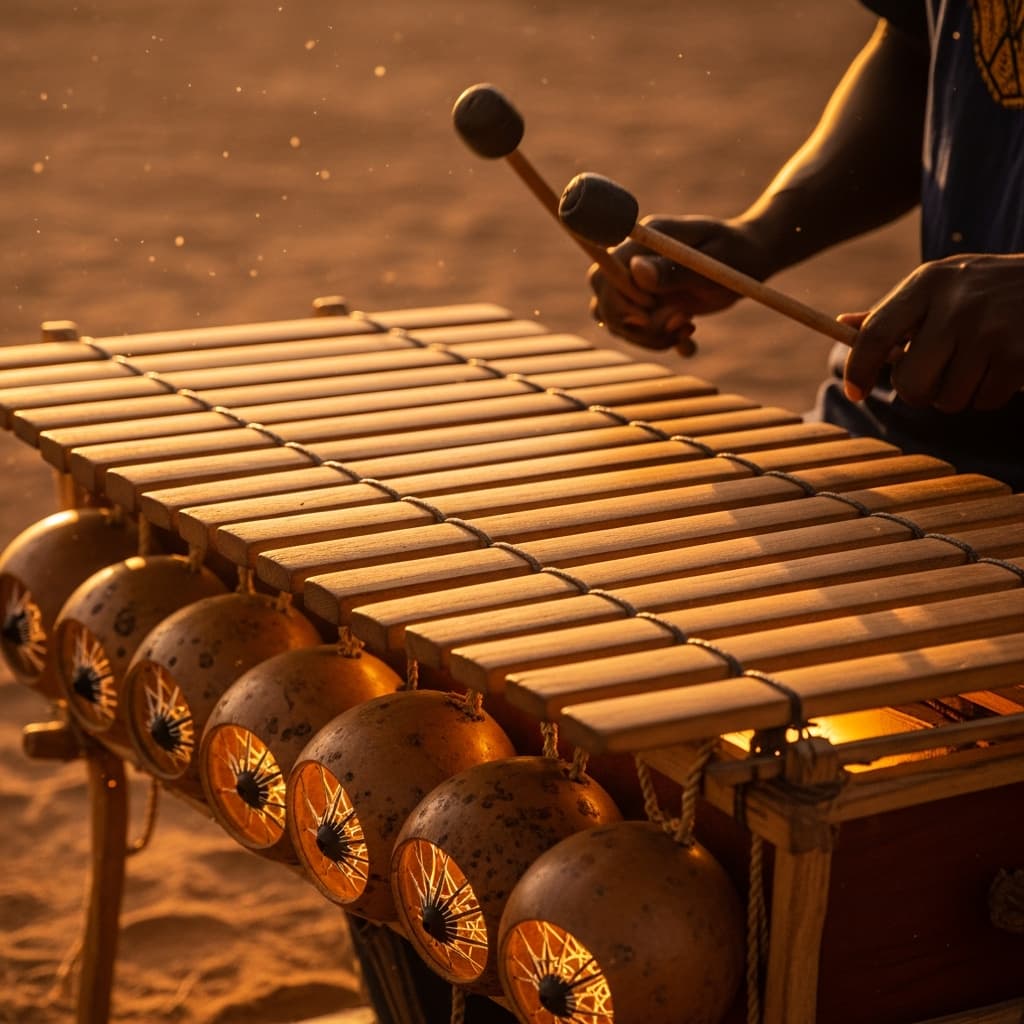
Pluck a single note on a kora and hear a waterfall of harmonics cascade like liquid starlight, the 21 strings singing in perfect sympathy. Kora instruments are not mere harps. They are griot libraries, royal counselors, and spiritual bridges. From the sun-baked courtyards of Mali to global stages with Toumani Diabaté, the kora carries Mandinka epics across 1,000 years and 15+ countries. Whether you’re learning Bambara through griot praise songs or planning a Timbuktu festival, kora instruments invite you to tune into West Africa’s melodic heart.
Hand-built from calabash, cow skin, and fishing line, tuned with leather rings, the kora blends harp, lute, and thumb piano. It birthed blues scales and jazz improvisation. Let’s follow the strings through history and harmony.
Ancient Origins: Birth of the Bridge Harp (1000 CE – 1500 CE)
The kora emerges in the Mali Empire (13th century), born from ngoni spiked lutes and balafon xylophones. Legend credits Sundiata Keita’s griot Balla Fasséké with enlarging a hunter’s bow harp into a 21-string marvel. Mansa Musa’s 1324 Mecca pilgrimage spreads the instrument via returning scholars.
Kaabu Kingdom (Senegal/Gambia) refines tuning silaba (major) for praise, tomora for sorrow. Fulani add bass strings for cattle herding songs. Early koras use antelope horn bridges; cowrie shells decorate necks. As UNESCO recognizes, griot lineages like Kouyaté guard oral repertoires tied to the kora.
Anatomy & Craft: Building a Living Voice
A master jali (griot) crafts each kora in ritual stages.
- Calabash: Large gourd halved, dried, polished resonator body.
- Skin: Cow hide soaked, stretched, nailed amplifies harmonics.
- Neck: Hardwood (iroko/guava) pole pierced through calabash.
- Strings: 21 (11 left thumb, 10 right) traditionally harp strings, now fishing line.
- Bridge: Rosewood with notches transmits vibration.
- Tuning Rings: Leather konso slide to adjust pitch.
- Handle: Carved for grip during 8-hour performances.
Tuning systems: Silaba (F major), Hardino (D minor). Octaves span 3+, with bass kumbengo ostinato and treble birimintingo improvisation.
Playing Styles: Kumbengo, Birimintingo, and Storytelling
Griots play seated, kora vertical between knees.
- Kumbengo: Cyclic bass pattern—rhythmic foundation.
- Birimintingo: Melodic runs—virtuoso flourishes.
- Satanango: Vocal accompaniment—praise or history.
Repertoire: Sunjata epic (1,000+ lines), Kelefaba war tales, Lamban dance rhythms. Modern fusions: Afro-Cuban with Bola de Nieve, jazz with Herbie Hancock.
Regional Variations: A Kora Atlas
Mali: Epicenter of Tradition
Bamako: Toumani Diabaté (72-string symmetric kora). Kayes: Silaba tuning for Soninké migrants.
Senegal/Gambia: Coastal Groove
Casamance: Jola add percussion. Banjul: Sidiki Diabaté blends mbalax.
Guinea: Bass-Heavy Power
Kankan: Mory Kanté electrifies kora for “Yeke Yeke” global hit.
Beyond Mandinka: Adopted Voices
Mauritania: Moor griots use 18 strings. Burkina Faso: Sambla balafon-kora duets.
Why Kora Instruments Matter Today
· Koras preserve genealogy Kouyaté family traces 800 years.
· Tourism earns $50 millionMali’s Festival au Désert (pre-2012) drew 5,000
· Global influence: Paul Simon’s Graceland, Beyoncé samples kora in Black Is King.
· Women break barriers: Sona Jobarteh (first female virtuoso).
· Education: Brikama School trains 200 youth yearly.
· Sustainability: Calabash farms combat deforestation. As The Guardian celebrates, kora bridges oral history to streaming era.
Koras teach language Bambara pitch mimics string intervals. They heal kora therapy calms PTSD in Sierra Leone.
Hands-On Guide: Play, Build, Listen
· Start simple. Watch Ballaké Sissoko YouTube tutorials. Buy a travel kora (smaller, nylon).
· Join Bamako kora camps (January).
· Build your own: Source calabash in Kita markets, learn from Luthier Sidiki Jobarteh.
· Tune apps: Kora Tuner by Musa Filly. Pair with language sing Lamban in Wolof.
· Stream: Toumani & Sidiki album, AfroCubism.
· Travel? Study with Habib Koité in Bamako.
How Malegado Harmonizes Kora with Learning
· Malegado turns strings into syllabus.
· Study French to read Mali expedition journals.
· Learn Portuguese for Guinea-Bissau griot variants.
· Tutors teach kumbengo in Mandinka.
· Forums share silaba tabs.
Explore trade’s kora routes via this Malegado Swahili civilization guide. Translate tuning terms across tongues with our French-Portuguese translator article. From virtual griot sessions to melody-through-language lessons, Malegado plucks your path.
The Strings Still Sing
Kora instruments are memory in motion one kumbengo cycle, one birimintingo run, one griot breath, and 1,000 years unfold. Start strumming on Malegado today. The ancestors are listening.