
Pyramids of Giza: How the Pyramids of Giza Were Built and Their Cultural Significance
Pyramids of Giza: How the Pyramids of Giza Were Built and Their Cultural Significance The Pyramids of Giza are among the most famous landmarks in the world. Loc...
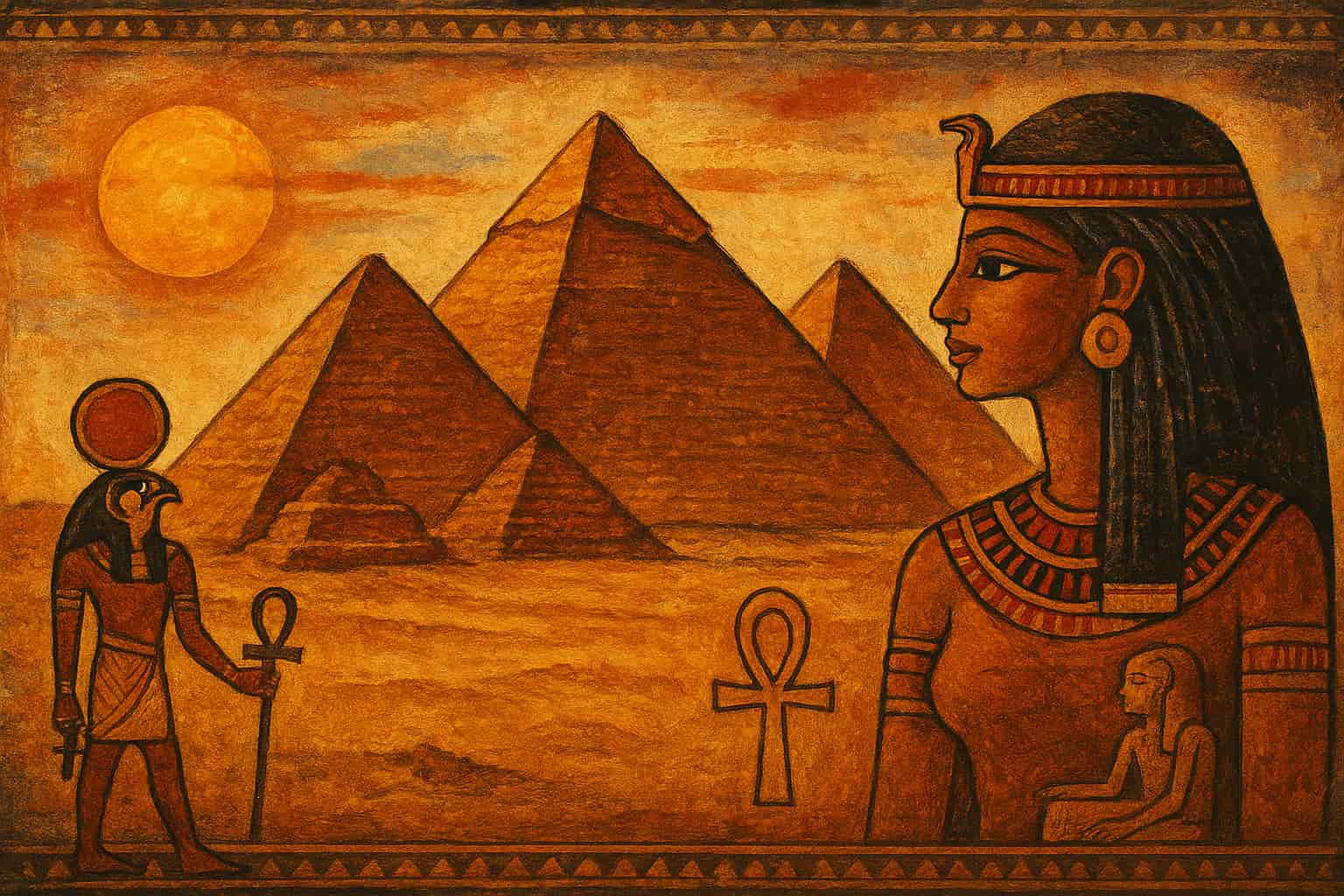
Pyramids of Giza: How the Pyramids of Giza Were Built and Their Cultural Significance
The Pyramids of Giza are among the most famous landmarks in the world. Located just outside Cairo, Egypt, they have stood for more than 4,500 years. Many people ask how the Pyramids of Giza were built, and the answer reveals more than just construction techniques. These massive stone monuments are not only feats of engineering but also expressions of African civilization, language, and culture.
Understanding their story connects us with a broader African heritage that stretches from the Nile Valley to the Sahel, the Horn of Africa, and beyond.
When Was the Great Pyramid of Giza Made?
The Great Pyramid of Giza, the largest of the three main pyramids, was constructed during the reign of Pharaoh Khufu, around 2580–2560 BCE. That makes it over four millennia old. It was part of a grand funerary complex that included smaller pyramids, temples, and causeways.
Historical records suggest that building the Great Pyramid took about 20 years, employing tens of thousands of skilled workers, not slaves. At completion, it stood as the tallest man-made structure in the world for nearly 4,000 years.
The Purpose of the Pyramids of Giza
The pyramids were built as monumental tombs for the pharaohs, who were considered both earthly rulers and divine figures. Ancient Egyptians believed in life after death, so the pyramids were carefully designed to protect the pharaoh’s body and hold goods, treasures, and offerings for the journey to the afterlife.
Their location was symbolic. Built on the west bank of the Nile, where the sun sets, they aligned with beliefs about the soul’s journey to the afterlife, closely tied to the sun god Ra.
How the Pyramids of Giza Were Built: Theories and Techniques
1. Skilled Workforce, Not Forced Labor
Archaeological discoveries show that the workers who built the pyramids were skilled artisans, engineers, and laborers. They lived in well-planned workers’ villages and were compensated with food, beer, and shelter.
2. Quarrying and Transporting Stone
Most of the limestone used for the outer layers was quarried locally, while granite for the internal chambers came from Aswan, about 800 kilometers away. Wooden sledges were used to move the blocks, and wetting the sand beneath reduced friction.
3. Ramp Systems
Ramps are believed to have been the primary method for lifting stones. These could have been straight ramps, zigzagging up the sides, or spiral ramps wrapping around the pyramid.
4. Mathematical and Astronomical Precision
The pyramids align almost perfectly with the cardinal points of the compass. This required advanced knowledge of geometry, surveying, and astronomy skills also found in other African civilizations.
Cultural and Linguistic Links to Other African Civilizations
While the pyramids are Egyptian in origin, they are part of a much larger African story. Civilizations across Africa have long histories of monumental architecture, sophisticated language systems, and complex spiritual beliefs.
1. Nubia and the Kushite Kingdoms
South of Egypt, in what is now Sudan, the Nubians and later the Kingdom of Kush built their own pyramids smaller but more numerous than those at Giza. The language of Kush, Meroitic, is still not fully deciphered, but inscriptions show a rich writing system. The relationship between Egypt and Nubia was one of trade, warfare, and cultural exchange. Many Egyptian words and cultural practices have Nubian roots, showing a shared Nile Valley heritage.
2. The Horn of Africa and Ancient Punt
Egyptian records mention a land called Punt, likely located in the Horn of Africa (modern-day Somalia, Eritrea, and Ethiopia). Punt was a source of incense, gold, and exotic animals. Trade between Egypt and Punt brought not only goods but also linguistic influences, with loanwords appearing in Egyptian for products and cultural items imported from the region.
3. West African Oral Traditions
Although West Africa was geographically distant from Egypt, trade routes connected the Nile Valley with regions such as the Sahel and the Niger River basin. Oral traditions from the Mandé, Wolof, and Fulani peoples preserve stories of distant kingdoms and great builders. While these are not direct historical accounts of Egypt, they show how the idea of monumental construction and divine kingship spread through African storytelling.
4. The Berber Connection in North Africa
The Berber-speaking peoples of North Africa have lived across the Sahara for thousands of years, maintaining trade networks that linked Egypt to the Maghreb. Ancient Egyptian and Berber share some linguistic traits, especially in words related to farming, navigation, and desert survival.
Language as a Key to Heritage
The language of the pyramid builders Ancient Egyptian was part of the larger Afroasiatic language family, which includes Berber, Cushitic, Chadic, Omotic, and Semitic languages spoken across Africa and the Middle East. This means that modern African languages such as Somali, Hausa, and Tamasheq share distant linguistic roots with the language once spoken in the Nile Valley.
Today, Ancient Egyptian survives in the liturgical language of the Coptic Church. Coptic is the final stage of the Egyptian language, written with the Greek alphabet plus extra characters from Demotic script. Learning Coptic can offer insight into ancient texts, just as learning Swahili or Amharic connects us to other great African histories.
Platforms like Malegado help preserve and promote African languages, ensuring that the linguistic threads connecting our past to the present remain alive.
Sidebar Glossary: Ancient Egyptian Terms Related to the Pyramids
Shared Cultural Themes Across Africa
Despite geographic differences, many African civilizations share cultural traits found in ancient Egypt:
Divine Kingship: From the pharaohs of Egypt to the Obas of Benin and the Mwami of Rwanda, rulers were often seen as chosen by or descended from divine powers.
Monumental Architecture: The pyramids of Egypt, the rock-hewn churches of Lalibela in Ethiopia, and the stone cities of Great Zimbabwe all show Africa’s tradition of large-scale, skillful construction.
Symbolism of the Sun: Like the Egyptian worship of Ra, many African societies linked the sun to life, fertility, and spiritual power.
Language as Cultural Memory: Oral traditions, inscriptions, and written records have preserved African history across centuries.
Why This Matters for Modern Learners
For those learning African languages, understanding the cultural and historical context of monuments like the Pyramids of Giza adds depth to the learning process. Language is more than vocabulary it carries the worldview, values, and achievements of the people who speak it.
When you study African languages, you are learning the living threads of the same continent that built the Pyramids. You are stepping into a story that connects ancient stone builders to modern storytellers, poets, and everyday speakers.
Final Thoughts
The Pyramids of Giza are not just wonders of ancient engineering. They are part of a wider African tradition of innovation, artistry, and cultural expression. By exploring how the Pyramids of Giza were built and connecting their legacy to other African civilizations, we see a unified history of human achievement rooted in Africa.
Through language learning and cultural exploration, we can keep this heritage alive. Visit Malegado to start your journey into African languages and discover the connections that link the pyramids to the entire African story.