
Petra: The Rose-Red City of Jordan
Petra is Jordan’s most famous treasure, carved into rose-colored cliffs. From the Treasury to the Monastery, here’s why this ancient city is a must-see destination.
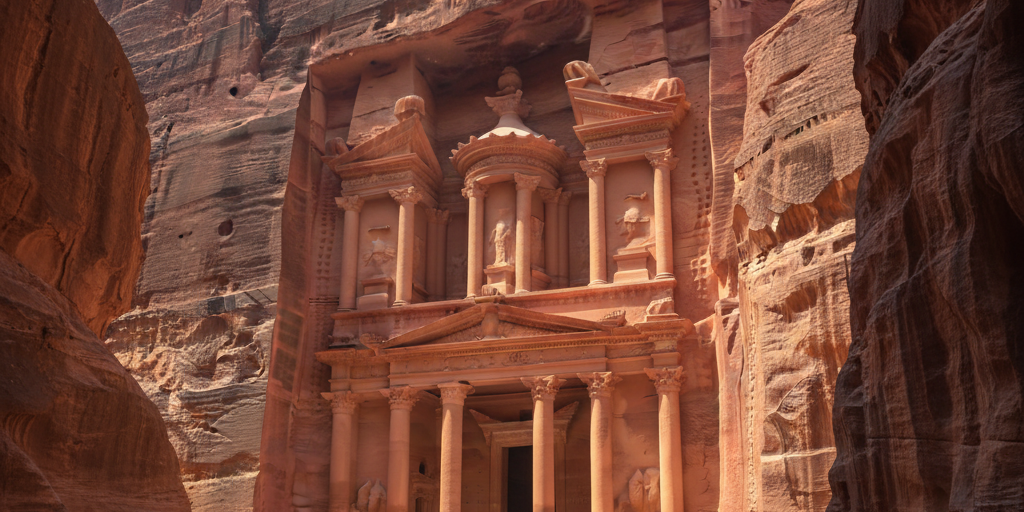
Hidden among the rugged mountains and desert canyons of southern Jordan lies Petra, one of the world’s most spectacular archaeological sites. Often called the “Rose-Red City” because of the color of its stone, Petra is more than just a destination; it’s a journey back in time to a lost civilization.
Each year, more than a million visitors walk through its dramatic sandstone passageways, marveling at the grandeur of temples, tombs, and monuments carved directly into the cliffs. Recognized as a UNESCO World Heritage Site and one of the New Seven Wonders of the World, Petra is a place where history, mystery, and beauty come together.
The History of Petra
Petra was the capital of the Nabataean Kingdom, which thrived around the 4th century BCE. The Nabataeans were skilled traders, controlling vital trade routes that connected Arabia, Egypt, and the Mediterranean. Their wealth allowed them to build Petra into a sophisticated city with advanced water systems, temples, and theaters.
When the Roman Empire absorbed Petra in 106 CE, it continued to prosper, but by the Middle Ages, it was largely abandoned and forgotten by the Western world. It wasn’t until Swiss explorer Johann Ludwig Burckhardt rediscovered it in 1812 that Petra regained international fame.
Highlights of Petra
Visitors to Petra often begin their journey through the Siq, a narrow gorge that winds for nearly a mile before dramatically revealing the city’s most famous landmark:
- Al-Khazneh (The Treasury): A breathtaking façade carved into the sandstone cliffs, thought to be a royal tomb.
- The Monastery (Ad-Deir): Larger than the Treasury, this monumental structure rewards those who climb nearly 800 steps to reach it.
- The Royal Tombs: A cluster of ornate burial chambers showcasing Nabataean craftsmanship.
- The Theater: Carved into the mountainside, capable of seating thousands, reflecting Roman influence.
- High Place of Sacrifice: Offering panoramic views of the city, this sacred site connects history with spirituality.
Every corner of Petra tells a story of ingenuity, culture, and resilience.
Why Petra Attracts Travelers
Petra is not only an archaeological wonder but also an immersive cultural experience. Visitors are drawn by:
- Its Beauty: The rose-red cliffs glow at sunrise and sunset, creating a magical atmosphere.
- Its Mystery: Much of Petra’s history and purpose remains a subject of debate, adding to its allure.
- Its Significance: As one of the New Seven Wonders, it’s a bucket-list destination for travelers worldwide.
This combination of history, landscape, and mystique makes Petra unlike any other place in the world.
Petra and Cultural Learning
Exploring Petra is also an opportunity for cultural immersion. Arabic is the language spoken in Jordan, and interacting with local guides and communities provides travelers with a chance to connect more deeply with the region.
At Malegado
, we believe that travel and language learning go hand in hand. Visiting Petra offers not just visual beauty but also a chance to practice Arabic phrases and understand Middle Eastern traditions. With Learn Languages
through Malegado, you can continue that cultural journey wherever you are.
Tips for Visiting Petra
- Best Time to Visit: Spring (March–May) and autumn (September–November) offer pleasant weather.
- Duration: Spend at least a full day; two days allow you to see both main and less-traveled sites.
- Tickets: Entry fees vary for day trips versus multi-day visits. Buy in advance if possible.
- Petra by Night: Don’t miss this unique experience where The Treasury is lit by thousands of candles, creating an unforgettable atmosphere.
With preparation, your visit will be comfortable and memorable.
Why Petra is a Must-See
Few places combine natural beauty, human achievement, and historical significance as Petra does. Walking its ancient paths is like stepping into another world, one where the past feels alive and the stones whisper stories of a lost civilization.
For travelers and language learners alike, Petra is more than a destination; it’s an education in history, culture, and connection. With Malegado
as your guide, you can enrich your journey and make it an experience that stays with you forever.