
 App Store
 Google Play
Neuschwanstein Castle: Germany’s Fairytale Fortress
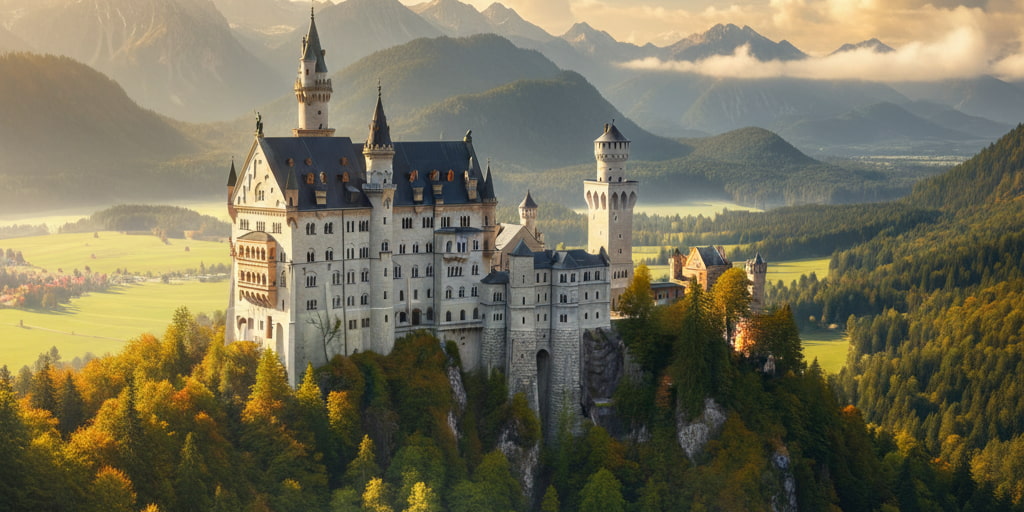
Neuschwanstein Castle in Germany isn’t just a landmark it’s a dream made real. Built by King Ludwig II, it remains a fairytale fortress that inspires millions every year.
Introduction
High in the Bavarian Alps, perched on rugged cliffs and surrounded by forests, stands Neuschwanstein Castle, a vision straight out of a storybook. Built in the 19th century by King Ludwig II of Bavaria, it has become one of Europe’s most visited and photographed castles. With more than 1.4 million visitors each year, Neuschwanstein is a symbol of romance, imagination, and national pride.
Yet, unlike medieval castles built for war, Neuschwanstein was built for dreams. It is less a fortress than a theatrical masterpiece an homage to medieval ideals, German mythology, and Ludwig’s obsession with beauty and art.
The Dream of King Ludwig II
King Ludwig II, often called the “Fairy Tale King,” was an eccentric monarch with a passion for the arts, architecture, and the operas of composer Richard Wagner. After Bavaria’s defeat in the Austro-Prussian War, Ludwig withdrew from politics and instead poured his energy into building castles.
Neuschwanstein, begun in 1869, was Ludwig’s most ambitious project. Inspired by Wagner’s operas, medieval legends, and Christian symbolism, the castle was meant to be his personal refuge, a place where he could escape reality and immerse himself in fantasy. Sadly, Ludwig lived in the castle for only a few months before his mysterious death in 1886.
Architecture and Design
Neuschwanstein Castle is not medieval but rather neo-romantic in style. It reimagines the medieval castle with soaring towers, spires, and richly decorated interiors. The setting alone, perched 800 meters above sea level overlooking the Hohenschwangau valley, makes it unforgettable.
Inside, visitors are transported into a world of myth and legend:
- Throne Hall: Designed to resemble a Byzantine basilica, with golden mosaics of saints and kings.
- Singer’s Hall: Inspired by medieval banquets and operas, decorated with murals of heroic legends.
- Private Chambers: Reflect Ludwig’s fascination with Wagner’s operas, with murals depicting Tristan and Isolde and The Ring Cycle.
Every detail was intended to reflect Ludwig’s vision of a chivalric, romantic past that perhaps never truly existed.
Cultural Significance
Though it began as Ludwig’s private dream, Neuschwanstein quickly became a public treasure. Just weeks after his death, the castle was opened to visitors, and it has been attracting admirers ever since. Today, it stands as:
- A symbol of Bavaria and Germany’s cultural heritage.
- A monument to Romanticism, blending art, literature, and architecture.
- A global icon that inspired Walt Disney’s Cinderella Castle.
Neuschwanstein Today
More than 1.4 million people visit Neuschwanstein each year. In peak summer months, up to 6,000 tourists a day walk through its ornate halls. Despite its fairy-tale charm, the castle faces preservation challenges. The Alpine climate, millions of footsteps, and the sheer age of the building mean that constant restoration is necessary.
Yet the magic of Neuschwanstein endures. From its towering spires to its dreamlike setting, it continues to inspire wonder, transporting visitors into Ludwig’s imagination.
Why It Captures the World’s Imagination
Neuschwanstein Castle has global appeal because it blends fantasy with history. It was not built to defend, but to inspire, and that makes it timeless. Travelers see not just a castle but a dream carved in stone.
Its allure lies in:
- Location: Nestled in the Bavarian Alps with panoramic views.
- Design: Romantic spires and towers that seem pulled from myth.
- Story: The eccentric king whose dream lives on long after his death.
Visiting Neuschwanstein Castle
For those planning a trip:
- Best time: Late spring or autumn for fewer crowds and clear views.
- Access: Tours are guided only; visitors cannot wander freely.
- Surroundings: Nearby Hohenschwangau Castle, Ludwig’s childhood home, offers additional historical context.