

Speak English with confidence — fast.
Short lessons, real practice, and a culture-first learning experience — on mobile or web.
Learn Kikuyu Pronunciation: A Clear Guide for Beginners
Master Kikuyu pronunciation with clear tips, native audio, and practice tools. Build confidence and connect deeper with culture.
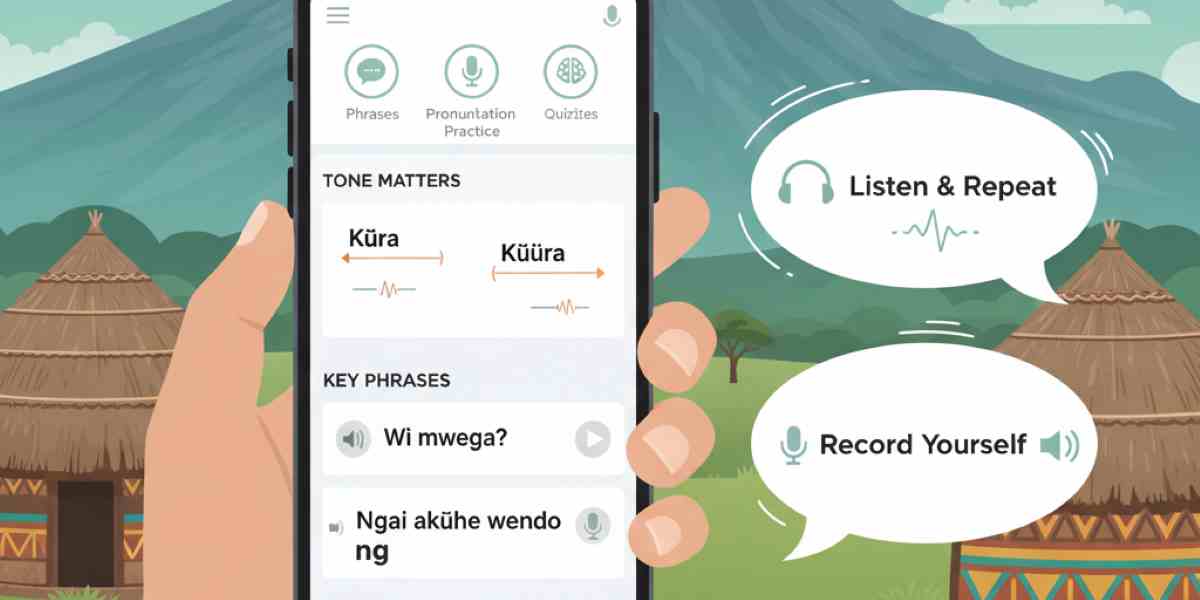
One of the biggest hurdles for new learners isn’t grammar or vocabulary it’s saying words the right way. If you want to speak naturally, you need to learn Kikuyu pronunciation early on. This guide breaks down why it matters, how to practice, and where to find tools that make mastering pronunciation easier.
Why It Matters
- Tones change meaning: Like many Bantu languages, Kikuyu uses tonal variation. A word pronounced incorrectly can mean something completely different.
- Cultural respect: Pronouncing words correctly shows effort and respect to native speakers.
- Confidence boost: When you sound natural, you’re more likely to practice often and hold real conversations.
- Better comprehension: Learning pronunciation sharpens your listening skills and helps you catch meaning in daily speech, songs, or stories.
How to Learn Kikuyu Pronunciation
1. Start with Vowels and Consonants
- Kikuyu has five vowels (a, e, i, o, u) but with longer and shorter versions. Practice saying them slowly and clearly. Consonants like ng’, ny, and th often challenge beginners listen closely to natives.
2. Focus on Tone
- Kikuyu is tonal, meaning pitch changes can alter meaning. Example: the same syllable may mean different things depending on whether it’s high or low in tone. Apps and audio lessons help you hear the difference.
3. Use Native Audio Resources
- Forvo.com: Search for Kikuyu words and hear native pronunciation.
- Agikuyu.web.app: Free beginner lessons with built-in audio recordings.
- YouTube – Let’s Learn Kikuyu: Step-by-step lessons on greetings, tones, and everyday words.
4. Apps That Train Pronunciation
- Wĩrute Gĩkũyũ – Learn Kikuyu (Android): Includes pronunciation guides and quizzes.
- Lingofrica (Android): Offers interactive audio to practice repeating after native speakers.
- Kikuyu M(A)L (iOS): Flashcard-style app with audio examples to test your recall.
5. Practice with Songs and Proverbs
- Listening to Kikuyu gospel or folk music is one of the easiest ways to catch natural rhythm. Proverbs are short, repeatable, and help train intonation.
Want more guided resources? Explore curated pronunciation tools at malegado.com Kikuyu Learning Hub.
Key Phrases to Practice Pronunciation
Here are some beginner phrases to train your ear and tongue:
- Wî mwega? (How are you?) – focus on the “wî” vowel sound.
- Nîwega (Thank you / I’m fine) – emphasize the tones in “nî.”
- Ngai akũhe wendo (God bless you) – practice the nasal “ng.”
- Tũgũcookanîre rîngî (Let’s meet again) – slow down to get rhythm and vowels right.
Tips to sound natural:
- Record yourself and compare with native audio.
- Break down long words into syllables.
- Repeat phrases daily until they roll off your tongue.
- Pair pronunciation drills with vocabulary flashcards.
Challenges in Kikuyu Pronunciation
- Tone sensitivity: English speakers often miss pitch differences.
- Unique sounds: Nasal consonants (like “ng’”) require extra practice.
- Dialect variation: Kikuyu has regional accents focus first on standard pronunciation.
- Confidence gap: Learners sometimes hesitate to speak for fear of mistakes.
The solution? Listen daily, repeat often, and practice with patient native speakers or tutors.
If you want to speak Kikuyu confidently, start by mastering pronunciation. Free resources like Malegado and YouTube channels like Let’s Learn Kikuyu give you the tools you need. Add music, proverbs, and community practice, and you’ll soon notice real progress.
Remember: the fastest way to fluency is to learn Kikuyu pronunciation first. Clear sounds lead to clear conversations and a deeper connection to Kenya’s culture.
Explore more tools, apps, and pronunciation guides at .malegado.com
Speak English with confidence — fast.
Short lessons, real practice, and a culture-first learning experience — on mobile or web.