
 App Store
 Google Play
German for Work: Your Key to Professional Success
Learning German for work opens doors to global business opportunities. From corporate meetings to networking, discover how mastering German enhances your career.
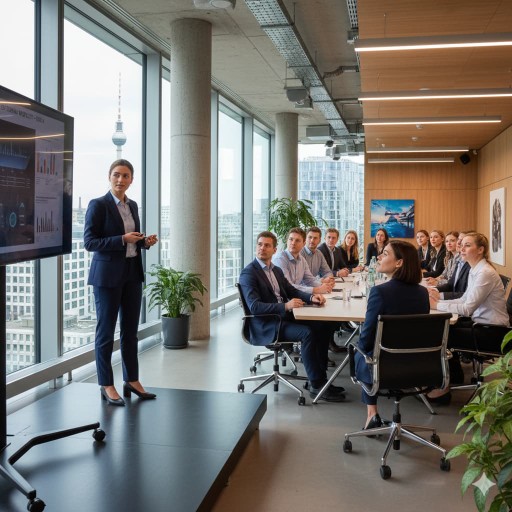
In today’s interconnected world, language skills are more than a personal asset they are a career advantage. While English remains the global lingua franca, German stands out as one of the most powerful business languages. Whether you are negotiating contracts with a German partner, applying for a multinational role, or working in industries like engineering, finance, or healthcare, German for work is a tool that can elevate your professional trajectory.
This article explores why German is vital in the workplace, how you can learn it effectively, and practical phrases and cultural nuances to help you succeed.
Why Learn German for Work?
1. Germany’s Economic Powerhouse Status
Germany is Europe’s largest economy and the fourth-largest worldwide. Mastering German gives you direct access to one of the world’s strongest job markets, from Berlin’s booming tech sector to Bavaria’s manufacturing giants.
2. Multinational Opportunities
Companies like Siemens, BMW, Bosch, Allianz, and Deutsche Bank operate globally but retain strong German roots. Employees fluent in German have a competitive edge in securing roles within these firms.
3. Networking and Professional Growth
Business networking isn’t just about skills it’s about building trust. Communicating in German shows respect and commitment, which fosters deeper relationships with colleagues and clients.
4. Academic and Research Advantage
German is a leading language in scientific research, engineering, and academia. Professionals who can read research papers or collaborate in German gain faster access to industry-shaping knowledge.
Essential German for the Workplace
Greetings and Introductions
- Guten Morgen – Good morning
- Es freut mich, Sie kennenzulernen – Nice to meet you
- Wie geht es Ihnen? – How are you?
Professional Etiquette
- Vielen Dank für Ihre Zeit – Thank you for your time
- Könnten Sie das bitte wiederholen? – Could you please repeat that?
- Ich freue mich auf unsere Zusammenarbeit – I look forward to our collaboration
Meeting and Presentation Vocabulary
- Besprechung – Meeting
- Vertrag – Contract
- Projekt – Project
- Zielsetzung – Objective
Negotiation and Collaboration
- Wir müssen die Bedingungen besprechen – We need to discuss the terms
- Das ist ein fairer Vorschlag – That’s a fair proposal
- Lassen Sie uns einen Kompromiss finden – Let’s find a compromise
Workplace Culture in Germany
1. Formality Matters
German workplaces often emphasize formality. Using the polite form “Sie” (you) instead of “du” shows professionalism unless invited otherwise.
2. Punctuality is Key
In German business culture, being even a few minutes late can be seen as disrespectful. Arriving on time communicates reliability.
3. Clear Communication
Germans value clarity and directness. Ambiguous statements may cause confusion. Being precise with language builds trust.
4. Hierarchy and Structure
German companies often have clear hierarchies. Respecting titles and roles is essential when communicating in professional settings.
How to Learn German for Work Effectively
1. Professional German Courses
Enroll in courses that focus on Business German (Wirtschaftsdeutsch). These courses cover industry vocabulary, writing formal emails, and workplace etiquette.
2. Language Apps for Business German
Apps like Lingoda, Busuu, or Babbel offer business modules with role-play simulations for meetings, interviews, and presentations.
3. Corporate Training Programs
Many companies in Germany provide employees with subsidized German classes. Take advantage of employer-sponsored training if available.
4. Immersive Learning
- Read German business newspapers like Handelsblatt.
- Watch interviews with CEOs or German news channels.
- Listen to German business podcasts to sharpen your vocabulary.
5. Practice with Native Speakers
Use platforms like Tandem or iTalki to practice with professionals in your field. Real-time conversation accelerates fluency.
Career Fields Where German Gives You an Edge
1. Engineering & Manufacturing – Germany leads in automotive and mechanical engineering.
2. Finance & Banking – Frankfurt is a global financial hub.
3.Healthcare & Pharmaceuticals – German is crucial for doctors, nurses, and researchers.
4.Technology & Startups – Berlin is Europe’s Silicon Valley.
5. Tourism & Hospitality – Germany attracts millions of international visitors every year.
Challenges of Learning German for Work
- Complex Grammar – Cases (Nominative, Accusative, Dative, Genitive) require practice.
- Formal vs Informal Speech – Distinguishing “Sie” and “du” is crucial.
- Industry-specific Vocabulary – Each profession demands specialized terminology.
Solution: Focus on workplace-related vocabulary first and gradually expand into broader German.
Practical Tips to Stay Motivated
- Set clear career goals (e.g., “I want to negotiate contracts in German within a year”).
- Use a language diary to track new business terms.
- Practice short daily sessions instead of long, irregular study blocks.
- Join LinkedIn groups or professional associations in German to immerse yourself.
Conclusion
Learning German for work is more than memorizing phrases; it’s about building cultural competence, professional confidence, and communication skills that unlock global opportunities. Whether you’re attending meetings, drafting contracts, or networking, German positions you as a valuable professional in international markets.
In a competitive world, mastering German is not just language learning it’s a career strategy.