

From Timeless Heritage to Modern Arabic: Your Guide to the Medina in Marrakech Morocco
From Timeless Heritage to Modern Arabic: Your Guide to the Medina in Marrakech Morocco The medina in Marrakech Morocco is not simply a place you visit it is a...
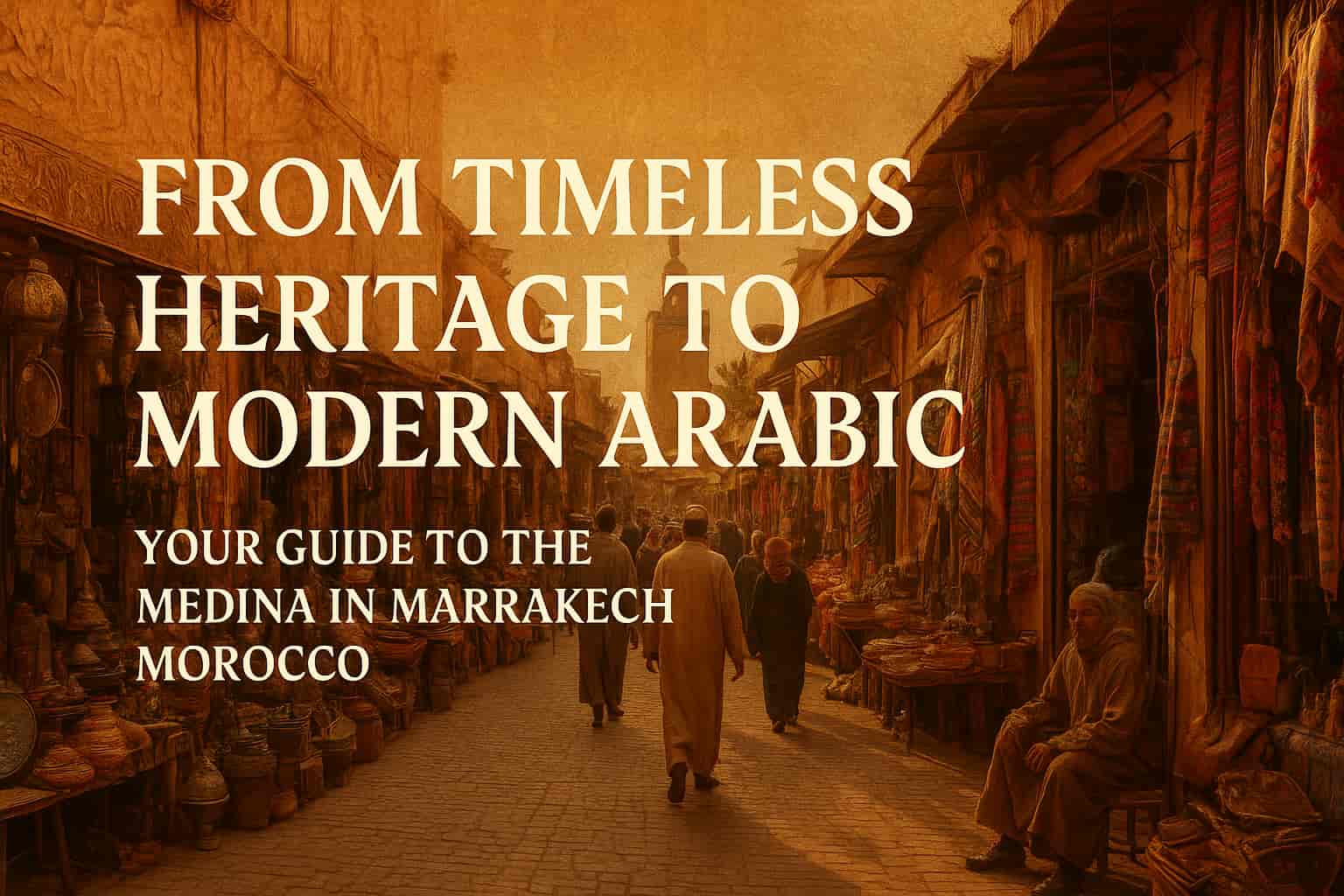
From Timeless Heritage to Modern Arabic: Your Guide to the Medina in Marrakech Morocco
The medina in Marrakech Morocco is not simply a place you visit it is a living heartbeat that pulls you into the past while carrying you forward into the present. Entering through its monumental gates feels like stepping through layers of history, where the air itself carries centuries of voices, barter calls, and the echo of camel bells from the old trans-Saharan caravans. This walled city founded in the 11th century under the Almoravid dynasty has stood as both a fortress and a marketplace, a meeting ground for traders from Sub-Saharan Africa, Arab merchants from the east, and European travelers from across the Mediterranean. Its narrow alleys twist like ancient memory, lined with souks where merchants still call out in Moroccan Arabic, or Darija, and sometimes in Amazigh, the language of Morocco’s indigenous Berber people. To walk here is to experience the fusion of African and Arabic identities, and for language learners, it is a rare chance to hear words that have traveled across centuries and across deserts.
The medina’s cultural roots.
The medina’s cultural roots stretch far beyond Morocco’s borders. For centuries, Marrakech stood as a crossroads between the Maghreb and West Africa, linked by camel caravan routes that carried not only gold, salt, and ivory but also ideas, music, religious teachings, and languages. From Mali’s Timbuktu came scholars whose Arabic prose influenced Moroccan intellectual life; from Mauritania and Senegal came traders whose greetings, bargaining styles, and proverbs subtly shaped the oral traditions of Marrakech. This constant exchange gave birth to a cultural fabric in which Moroccan Arabic retains traces of sub-Saharan vocabulary, Amazigh rhythm, and Arab poetic form. Even today, a careful ear in the medina can catch hints of Wolof in the market chatter, or spot Tuareg-inspired symbols woven into a carpet’s design. Such encounters remind us that languages, like the medina itself, are never static; they are always absorbing, adapting, and retelling history in new voices.
The souks of Marrakech are more than commercial hubs; they are open-air classrooms for anyone eager to connect with the Arabic language in its local form. Bargaining is a performance of wit and courtesy, where every phrase matters. A vendor might greet you with a warm “Marhaban” (welcome), offer you tea while you browse, and then launch into a friendly debate over prices using phrases like “Bikam hadha?” (How much is this?) or “Hadi ghalia” (This is expensive). For learners, these interactions are priceless — you are not just memorizing vocabulary, you are engaging in a centuries-old ritual of exchange. Even gestures and body language carry cultural meaning, from the way goods are presented to the symbolic importance of sharing food or drink before sealing a deal. In this way, the medina teaches Arabic as it is truly spoken, infused with the warmth, humor, and rhythm of daily Moroccan life.
To understand the medina is also to appreciate the architecture and urban design that frame this living culture. Houses, or riads, hide their beauty within, offering shaded courtyards, tiled fountains, and lush gardens that reflect the Islamic ideal of privacy and paradise. The city gates, or bab, are not merely entrances but historical markers each with its own story, sometimes named after distant lands or important trade goods that once passed through them. The kasbah, a fortified section of the medina, stands as a reminder of Marrakech’s strategic importance, not only for defense but also for governance and trade control. Each stone, each archway, is a piece of the city’s linguistic heritage, with names and inscriptions preserving the dialects and scripts of past centuries.
Yet what makes Marrakech’s medina especially compelling for Malegado’s audience is its role as a cultural bridge within Africa. It is a place where heritage is not locked behind glass in a museum but is lived daily. Here, ancient Amazigh words share space with modern Arabic slang, and African rhythms spill from the drums of Gnawa musicians in Jemaa el-Fnaa square, blending seamlessly with the calls to prayer from the minarets. Visitors who approach with curiosity can experience the joy of tracing linguistic roots learning that “medina” itself comes from the Arabic word for “city,” that “souk” has parallels in several African languages, or that “Darija” reflects centuries of mixing between Arabic, Amazigh, and sub-Saharan tongues. This is cultural-linguistic history unfolding in real time, where every purchase, conversation, and performance becomes a living lesson.
For the first-time traveler, navigating the medina can feel like entering a labyrinth, but it is in getting slightly lost that the true magic happens. A narrow alley may lead you to a spice seller who explains the uses of ras el hanout in both Arabic and French, or to a leather tannery where workers speak Amazigh while crafting goods using techniques that predate Islam in North Africa. The scents of cumin, saffron, and preserved lemon mix with the sweet aroma of mint tea, and the clanging of copper artisans mingles with the hypnotic strings of the guembri. In this sensory landscape, language learning is not separate from cultural immersion it is a natural outcome of engagement with people and place.
Final thoughts.
Ultimately, the medina in Marrakech Morocco is a mirror of Africa’s interconnected histories. It embodies the resilience of traditions that have survived empires, colonial powers, and global shifts, adapting while holding fast to their essence. It is a reminder that learning a language like Arabic especially in its Moroccan form is not merely about words, but about entering a shared space of memory, identity, and exchange. For Malegado learners, this is the deeper invitation: to let the medina teach you not only vocabulary but also the cultural mindset that gives those words life. In doing so, you don’t just visit Marrakech; you become part of its timeless conversation.