
 App Store
 Google Play
From Deutsche Mark to Euro: The Story of Germany’s Currency Transition
The Deutsche Mark was a symbol of Germany’s stability and pride. Discover why it was replaced by the Euro, what it meant for Europe, and why its story still matters today.
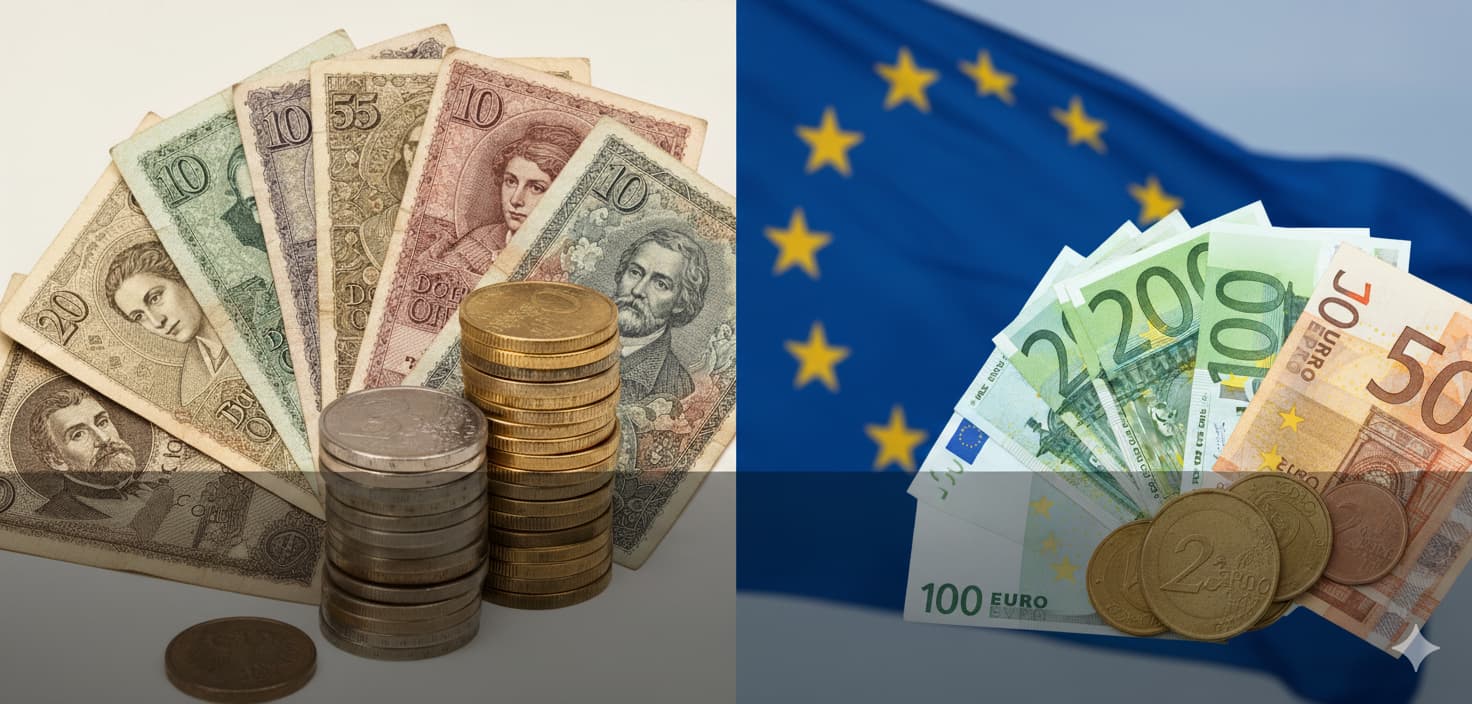
Currencies are more than just a way to buy and sell. They reflect a nation’s identity, economy, and even its history. In Germany, no symbol captured this better than the Deutsche Mark (DM), the currency that carried the nation through post-war recovery and became a pillar of stability in Europe. Today, the Euro (€) has taken its place, but the story of how Germany transitioned from the Deutsche Mark to the Euro is one of resilience, trust, and European unity.
The History of the Deutsche Mark
The Deutsche Mark was introduced in 1948, replacing the Reichsmark, which had lost value due to hyperinflation and the chaos of World War II.
- Birth of a Currency (1948): The Deutsche Mark was launched during the Allied occupation of Germany. It became a symbol of stability and helped rebuild the economy.
- Economic Miracle (1950s–1960s): The new currency played a central role in the Wirtschaftswunder (economic miracle), when Germany rapidly rebuilt and became one of the world’s strongest economies.
- Global Trust: The Deutsche Mark became known as one of the most stable and reliable currencies in the world. Central banks and investors held it in high regard.
By the 1980s and 1990s, the Deutsche Mark wasn’t just Germany’s currency; it was a cornerstone of European finance.
Why Replace the Deutsche Mark?
The question many ask is: if the Deutsche Mark was so strong, why replace it with the Euro?
- European Unity: The creation of the Euro was about more than money. It was about uniting Europe under a shared identity and making trade easier across borders.
- Economic Strength: A shared currency reduced exchange costs and created a powerful bloc that could compete globally.
- German Leadership: As the most influential economy in Europe, Germany led the way in adopting the Euro, even though many citizens were deeply attached to the Deutsche Mark.
Transition to the Euro
The Euro was officially introduced in 1999 as an electronic currency for banking and financial markets. Physical notes and coins entered circulation in 2002.
- Exchange Rate: The fixed rate was 1 Euro = 1.95583 Deutsche Marks.
- Public Reaction: Many Germans felt nostalgic for the Deutsche Mark, viewing it as a symbol of economic security. Even today, surveys show that some citizens still miss it.
- Economic Impact: Despite initial fears, the Euro strengthened Germany’s role in Europe and global trade.
Cultural Significance of the Deutsche Mark
The Deutsche Mark was more than just money. It represented:
- Rebuilding after War: A fresh start for Germany in 1948.
- Trust and Stability: A currency that resisted inflation and became globally respected.
- National Identity: Many Germans saw the DM as part of who they were.
Today, collectors still keep Deutsche Marks, and the Bundesbank even allows citizens to exchange old notes and coins for Euros at the fixed rate.
What the Euro Represents
The Euro is now the official currency of 20 European Union countries and is used by more than 340 million people daily. For Germany, the Euro represents:
- Integration: A symbol of belonging in the European Union.
- Global Power: The Euro is the world’s second most traded currency after the U.S. dollar.
- Economic Benefits: Easier trade, tourism, and investment across Europe.
Learning About German and European History Through Language
Understanding the story of the Deutsche Mark and Euro is not only about finance, it’s about culture, history, and identity. This is why language learning platforms like Malegado
include rich cultural content alongside structured lessons.
When you explore the German language and history in Malegado, you’ll discover:
- Historical insights like Germany’s currency evolution.
- Cultural depth that connects language to identity.
- Interactive community features to discuss history and share knowledge.
For example, you can connect this story to broader global history in articles like The Colosseum
which also reflects the enduring value of heritage. Or you might explore cross-cultural exchange in the Swahili Civilization
.
External Perspective
According to Britannica
The Euro is not only an economic tool but also a powerful step toward political and cultural integration in Europe. The transition from the Deutsche Mark to the Euro was one of the most significant currency changes in modern history.
Conclusion
The story of the Deutsche Mark in Euro is one of continuity and change. While the Deutsche Mark symbolized trust, stability, and national pride, the Euro represents unity, integration, and global strength.
For learners of the German language and culture, this transition offers valuable lessons about how economics and identity intertwine. With platforms like Malegado
You can go beyond words to explore history, culture, and community, making language learning an enriching journey.