
Footprints of the Ancestors: The Dynamic World of African Traditional Dance
African traditional dance invokes spirits in every stomp and sway. Journey through sabar, ndombolo, and gumboot rhythms that bind community and history.
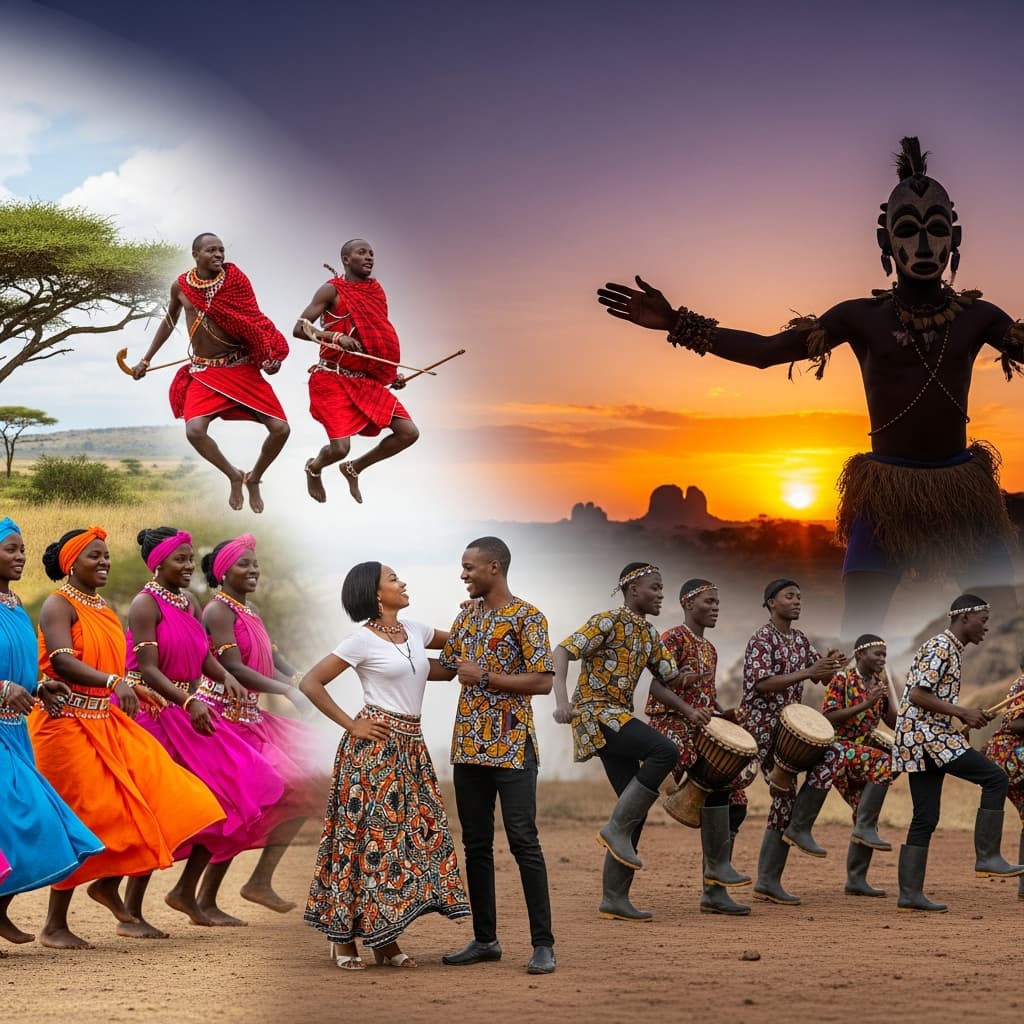
Feel the earth rise with every stomp of a Zulu indlamu warrior, shields flashing as high kicks slice the air like lightning. African traditional dance is not performance. It is invocation, education, rebellion, and joy in motion. From the swirling hip circles of Senegalese sabar to the trance leaps of San healing dances, over 3,000 ethnic styles pulse across 54 nations. Whether you’re learning Wolof through tassu poetry or joining a Dogon mask festival, African traditional dance steps you into the rhythm of community and cosmos.
Driven by polyrhythms, call-and-response, and symbolic gesture, traditional dance marks birth, harvest, war, and death. It birthed salsa, hip-hop, and ballet footwork. Let’s follow the footprints through time and territory.
Ancient Rhythms: Origins in Ritual (10,000 BCE – 1000 CE)
Dance begins with spirit. Tassili n’Ajjer rock art (Algeria, 8000 BCE) shows masked figures in circle formations early communal rites. San trance dances (South Africa, 2000 BCE) depict shamans shaking to enter dream worlds, healing the sick. Egyptian tomb reliefs (2500 BCE) capture acrobatic muu dancers at funerals.
Bantu migrations (1000 BCE–1000 CE) carry ngoma drum-dance complexes south. Great Zimbabwe (11th century) hosts jerusarema harvest circles. Mali Empire griots pair kora with bamana puppet leaps. Swahili lamu weddings blend Arab sway with Bantu stomp. Explore coastal fusion in this Malegado Swahili civilization guide.
Tribal Mastery: Classical Forms (1000–1800 CE)
Clans codify movement.
- Yoruba bata (Nigeria): Acrobatic spins honor Orishas.
- Akan adowa (Ghana): Delicate hands speak proverbs.
- Dogon sigi (Mali): Stilt dancers every 60 years reenact creation.
- Kuba mushongo (DRC): Masked satire for royal critique.
- Maasai adumu (Kenya/Tanzania): Jumping contests prove warrior vigor.
Luba women sway with lukuga scarves for fertility. Chokwe mukanda initiates leap through fire.
Colonial Chains & Defiant Steps (1800–1960 CE)
Bans fail to silence. Gumboot dance (South Africa) turns mine boots into percussion under apartheid. Pende (DRC) masks mock Belgian officers. Capoeira hides Angolan ngolo zebra kicks in acrobatics to evade slave masters.
San elders teach trance steps in secret. Makonde mapiko dancers scarify faces to preserve identity.
Independence & Global Stage (1960–2000 CE)
Freedom fuels fusion. Thomas Mapfumo pairs mbira with jerusarema for chimurenga protest. Salif Keita blends bamana with sabar funk. Miriam Makeba tours xhosa bow songs worldwide.
École des Sables (Senegal) trains 200 dancers yearly in sabar and bikutsi. Gule Wamkulu (Malawi) earns UNESCO status for masked morality plays.
Contemporary Pulse: Festivals, Therapy, Activism (2000–Today)
Dance drives $2 billion in tourism Zanzibar Sauti za Busara draws 20,000. Afrobeats exports azonto and shaku shaku. Nora Chipaumire deconstructs ndlamu in avant-garde.
Therapy: Gumboot treats trauma in Soweto clinics. Women lead: Oumou Sangaré revives wassoulou sway. Digital: TikTok amapiano logs 1 billion views. As National Geographic celebrates, traditional steps fuel global club hits.
Dance preserves language tassu in Wolof, praise names in chiShona. It empowers pantsula crews mentor township youth.
Styles & Structures: Dance Lexicon
- Circle: Ngoma, sabar community inclusion.
- Line: Adowa, indlamu hierarchy display.
- Solo: Eskista (Ethiopia) shoulder rolls, gnawa trance.
- Props: Shields (indlamu), stilts (sigi), fire (mukanda).
Regional Footprints: A Dance Atlas
West Africa: Energy & Commentary
Senegal: Sabar hip isolation. Mali: Bamana stilt puppets. Nigeria: Bata Orisha spins.
Central Africa: Fluid Hips
DRC: Ndombolo waist circles. Cameroon: Bikutsi pelvic power.
East Africa: Grace & Narrative
Kenya: Adumu jumps. Ethiopia: Eskista snake shoulders.
Southern Africa: Power & Protest
South Africa: Gumboot boots, pantsula hustle. Zimbabwe: Jerusarema harvest rolls.
North Africa: Trance & Precision
Morocco: Ahidous Berber circles. Egypt: Tanoura Sufi whirling.
Why African Traditional Dance Matters Today
It builds identity sabar at naming ceremonies. Health: Bikutsi burns 500 calories/hour. Economy: Dakar Biennale employs 1,000 dancers.
Youth: Pantsula reduces gang violence. Sustainability: Natural dye costumes. Global: Alvin Ailey honors gumboot.
Hands-On Guide: Step, Learn, Join
· Start easy. Mirror sabar on YouTube (Kine Lam).
· Join afrobeats classes in global cities.
· Travel? Mali sigi (2029), Ghana Panafest (August).
· Learn safely warm up for adumu jumps.
· Pair with language count in Bambara during bamana.
· Use Dance Reality AR app.
How Malegado Moves Dance into Fluency
Malegado makes steps your syllabus. Study French for sabar tassu in Dakar. Learn Portuguese for Angolan kizomba roots. Tutors teach bata Yoruba chants. Forums share gumboot tutorials. Translate move names across tongues via our French-Portuguese translator guide. From virtual circle sessions to rhythm-through-language lessons, Malegado keeps you in step.
The Beat Goes On
African traditional dance is conversation one sabar crack, one ndlamu kick, one eskista roll, and the ancestors dance with you. Start moving on Malegado today. The circle is open.