
Echoes in Stone: The Ancient Canvas of African Rock Art
African rock art whispers 100,000 years of myth and trance. Journey through Tassili swimmers, San shamans, and Dabous giraffes etched in living stone.
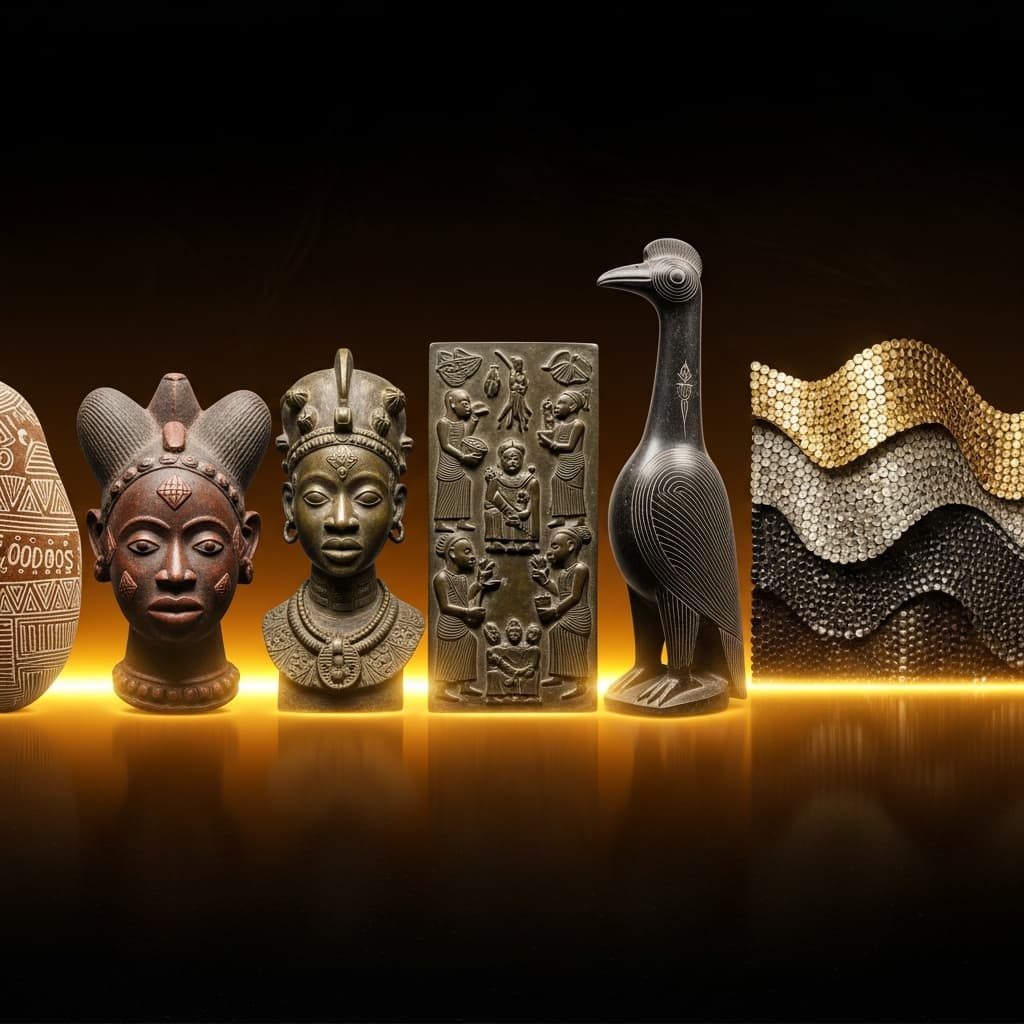
Stand beneath a sun-baked overhang in South Africa’s Drakensberg Mountains and trace 4,000-year-old fingers over a fading eland painted in red ochre. The antelope seems to leap, hunters in trance dance beside it. African rock art is not graffiti. It is humanity’s oldest diary, a 100,000-year visual language etched and painted across 30+ countries. From the abstract grids of Blombos Cave to the cattle parades of the Sahara, these images whisper myths, migrations, and spiritual visions. Whether you’re learning San click consonants through hunter scenes or trekking Namibia’s Brandberg, African rock art pulls you into the dawn of creativity.
Pigmented with ochre, charcoal, and blood, applied with fingers, sticks, or brushes of animal hair, rock art served shamans, herders, and storytellers. It predates writing, influenced Picasso, and now guides UNESCO preservation. Let’s follow the brushstrokes through time.
Prehistoric Beginnings: The First Artists (100,000 BCE – 2000 BCE)
Art starts with pigment. In South Africa’s Blombos Cave, 100,000-year-old ochre crayons bear cross-hatch patterns early symbols of intent. By 70,000 BCE, engraved ostrich eggshells in Namibia hold geometric codes. Apollo 11 Cave (27,000 BCE) yields painted stone slabs of therianthropes human-animal hybrids in trance.
The Sahara’s Golden Age (10,000–4000 BCE) explodes during a wet phase. Libya’s Acacus Mountains show swimmers in round-headed style. Algeria’s Tassili n’Ajjer a UNESCO site depicts archers, cattle, and masked figures in the “Pastoral Period.” Chad’s Ennedi Plateau layers giraffe caravans over hunter scenes. As UNESCO chronicles, these galleries span 100,000+ images across former savannas now desert.
Herders and Hunters: Symbolic Peaks (2000 BCE – 1000 CE)
Climate dries; art evolves. San (Bushmen) of southern Africa paint Drakensberg and Cederberg in delicate polychrome eland as rain animals, shamans bleeding from the nose in trance. Brandberg, Namibia home to the “White Lady” (actually a male healer) holds 45,000 images. Tsodilo Hills, Botswana the “Louvre of the Desert” layers 4,500 paintings over python-backed panels, sacred to San and Hambukushu.
Northward, Dabous Giraffes (Niger, 8000 BCE) life-size carvings draw global pilgrims. East Africa’s Kondoa, Tanzania shelters 1,800 sites with abstract “red geometric” style possibly initiation maps. Matobo, Zimbabwe records fat-tailed sheep and geometric “formlings” mushroom-induced visions.
Iron Age and Contact: Fading Canvases (1000 CE – 1900 CE)
Bantu farmers arrive; art shifts. Linton Panel (South Africa) shows cattle raids. Bambata Cave (Zimbabwe) overlays San hunters with Bantu shields. European settlers document fading sites George Stow copies Drakensberg panels in the 1870s.
Colonial disruption scatters San; many sites are vandalized. Yet art survives in oral lore—San elders still “read” panels like maps to water or spirit paths.
Revival and Protection: 20th Century to Today
Science awakens interest. David Lewis-Williams decodes San trance theory in Mind in the Cave (1980s). Trust for African Rock Art (TARA) photographs 200+ sites. UNESCO lists Tsodilo (2001), Tassili (1982), and Kondoa (2006) as World Heritage.
Contemporary artists respond. William Kentridge animates San motifs in charcoal. San-led tours in Drakensberg teach click-language stories. Digital scans preserve fading ochre CyArk lasers Brandberg for virtual eternity.
Styles, Techniques, and Hidden Meanings
Rock art splits into paintings (pigment + binder) and petroglyphs (pecked/engraved). Ochre (iron oxide) dominates red for blood, yellow for fat. Charcoal, white clay, hematite add contrast. Finger-brushes create fine lines; reed pens outline.
San polychrome uses shading for 3D eland. Sahara round-heads float in negative space. Geometric formlings swirl like neural maps trance fossils. Symbols recur: eland = potency, rain animals = weather control, therianthropes = shaman transformation.
Regional Masterpieces: A Rock Art Atlas
Southern Africa: Trance and Eland
Drakensberg (South Africa): 40,000+ images, 600+ sites dancing shamans, dying eland. Cederberg: Red hand stencils. Tsodilo (Botswana): Rhino panel with 100+ rhinos.
North Africa: Sahara’s Lost Eden
Tassili n’Ajjer (Algeria): 15,000 paintings cattle, archers, “crying cows.” Acacus (Libya): Swimming figures. Ennedi (Chad): Horned goddess.
East Africa: Abstracts and Herders
Kondoa (Tanzania): Red geometrics, giraffe processions. Laas Geel (Somaliland): Polychrome cattle with necklaces.
West/Central Africa: Rare but Potent
Dabous (Niger): Life-size giraffe petroglyphs. Bidzar (Cameroon): Geometric petroglyphs.
Why African Rock Art Matters Today
· It rewrites human history art predates Europe’s caves by 60,000 years.
· San descendants reclaim narrative via guided walks.
· Tourism sustains communities Tsodilo earns $1 million yearly.
· Climate change threatens desertification fades pigments.
· Science gains: neuropsychology confirms trance origins.
· Indigenous knowledge guides water conservation San read panels like GPS.
· As National Geographic reports, rock art proves Africa as creativity’s cradle.
Art preserves language San !Xóõ clicks echo in panel stories. It heals post-apartheid South Africa uses Drakensberg art for reconciliation.
Your Trail Guide: See, Study, Protect
Start virtual. Google Earth tours Tsodilo. Watch Rock Art Network webinars. Read David Coulson’s African Rock Art. Sketch formlings decode your own trance.
Travel responsibly. Hike Drakensberg with San guides (book via KwaZulu Cultural Tours). Camp near Brandberg with Damara custodians. Photograph ethically no flash, no touching.
Support TARA or African Rock Art Digital Archive. Learn basics San hand stencils teach negative space. Pair with language !Xóõ terms for eland improve fluency.
How Malegado Paints Rock Art into Learning
· Malegado turns stone into syllabus.
· Study French to read Tassili expedition journals.
· Learn Portuguese for Angolan petroglyphs. Tutors decode formlings in San lore.
· Forums share TARA photo links.
· Explore trade’s rock art routes via this Malegado Swahili civilization guide.
· Translate pigment names across tongues with our French-Portuguese translator article.
· From virtual cave dives to language-through-symbol lessons, Malegado etches your path.
The Stone Still Speaks
African rock art is humanity’s first tweet one ochre eland, one pecked giraffe, one trance dancer, and 100,000 years collapse into now. Start listening on Malegado today. The cave is open.