
Durbar Festival: Northern Nigeria's Equestrian Spectacle During Eid
Experience the Durbar Festival's pageantry in Nigeria's north during Eid, with emirs on horseback and vibrant traditions. Get dates, tips, and cultural insights for a memorable visit.
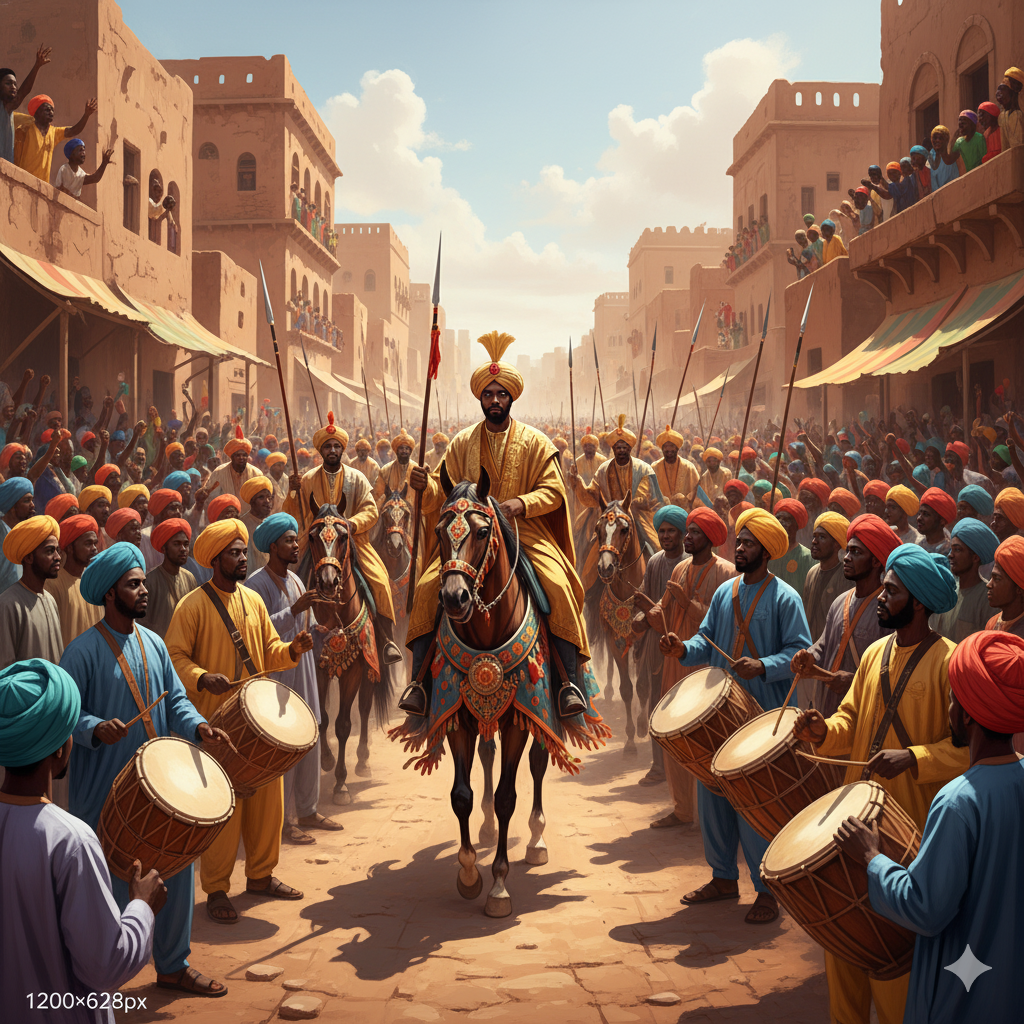
envision a whirlwind of color as emirs in flowing robes charge on decked-out horses, trumpets blaring and drums thundering in unison. The Durbar Festival, celebrated during Eid al-Fitr and Eid al-Adha in Kano, Katsina, Zaria, and Bida across Nigeria's Northern States, is a breathtaking showcase of horsemanship, pomp, and pageantry. This tradition brings Hausa-Fulani culture to life, blending Islamic rituals with communal joy in a display that's as historic as it is exhilarating.
Curious about this cultural gem? Let's break it down:
- Its origins in ancient Hausa emirates and evolution through colonial times.
- Why it thrives in modern Nigeria, boosting tourism and pride.
- Details on 2026 dates, the program, and key spots in the north.
- Handy tips for visitors to join respectfully.
- How Malegado connects you to the Hausa language and traditions for a deeper dive.
History of the Durbar Festival
The Durbar Festival began in the 15th century within the Hausa city-states, where rulers like those in Kano used it to demonstrate military might and gather loyal horsemen before campaigns. Horses, symbols of prestige brought through Saharan trade, featured prominently as emirs paraded to inspire troops. This practice rooted in Fulani nomadic heritage, emphasizing equestrian skills vital for conquests across northern Nigeria.
With the rise of the Sokoto Caliphate in the early 1800s under Usman dan Fodio, Durbar tied to Islamic festivals like Eid al-Fitr and Eid al-Adha, shifting from war prep to religious homage. British colonizers in the early 1900s co-opted it, using "Durbar" (from Persian for royal court) for loyalty displays, as seen in grand events honoring viceroys. Post-independence, it reclaimed its cultural essence, focusing on emirs' retinues with drummers, trumpeters, and ornate regalia.
In places like Katsina and Zaria, local twists highlight Fulani influences, while Bida adds Nupe flavors. As Britannica details in its overview of Hausa culture, Durbar reflects the blend of Islam and indigenous customs that shaped northern societies. This history makes it a living archive of Hausa-Fulani resilience.
Why the Durbar Festival Matters Today
Today, the Durbar Festival strengthens community ties in Nigeria's north, where over 50 million Hausa-Fulani people celebrate their shared Islamic and ethnic roots. It promotes unity amid diversity, with parades drawing families to honor emirs as guardians of tradition. Culturally, it preserves skills like horsemanship and craftsmanship in turbans and saddles, passing them to younger generations.
Tourism booms during Eid, injecting funds into local economies through markets and hospitality in Kano and beyond. For education, it offers insights into Islamic practices and Hausa history, attracting scholars and travelers. In a globalized world, Durbar fosters pride, countering stereotypes by showcasing northern Nigeria's vibrancy.
Events like this highlight communal celebrations, much like global festivals that blend faith and fun. They remind us how traditions adapt, keeping heritage alive while inviting outsiders to connect.
Practical Guide and Tips for the Durbar Festival
The 2026 Durbar Festival follows the Islamic calendar, with Eid al-Fitr around March 20 and parades in Kano and Katsina from March 21-22. Eid al-Adha falls near May 27, with grand displays in Zaria and Bida on May 28-29. Festivities last 2-3 days per Eid, starting post-prayer.
The program features:
- Morning Prayers: At central mosques, followed by greetings and feasting.
- Emir's Parade: Riders in embroidered gowns and turbans process from palaces, showcasing charges and salutes.
- Music and Displays: Kakaki trumpets, ganga drums, and praise singers accompany the pageantry.
- Communal Events: Wrestling, dancing, and markets with crafts like leatherwork.
Key locations:
- Kano: Emir's Palace and Racecourse for massive crowds.
- Katsina: Palace Square near the historic minaret.
- Zaria: Eid Ground and ancient city walls.
- Bida: Emir's Court with brass artisans nearby.
Fly into Kano Airport, then travel by bus (1-3 hours to others). Book hotels like the Prince Hotel in advance.
Tips include:
- Arrive by dawn for prayer spots; entry is free, but donations are welcome.
- Dress modestly: Long sleeves, trousers; women, headscarves.
- Stay hydrated in dry heat; carry water and hats.
- Respect customs: No photos without nods; stand for the emir.
- Try dan wake (bean cakes) from vendors, but opt for sealed drinks.
- Safety: Join groups, use licensed taxis; avoid carrying valuables.
Pair with palace tours or dye pits visits. These steps make your trip seamless and respectful.
How Malegado Helps You Experience the Durbar Festival
Malegado brings the Durbar Festival alive with English and Hausa lessons focused on northern Nigeria. Refine your English to discuss regalia or ask about horse breeds, then dip into Hausa phrases like "Sannu da zuwa" (welcome) for warm exchanges with locals. Our interactive modules cover cultural terms, enhancing your parade chats.
Tutors from Hausa regions explain emir hierarchies and Eid customs in one-on-one sessions. Practice role-plays for festival greetings or market talks. This approach echoes finding the right path in this Malegado guide on which English course is the best for learners.
Our community forums buzz with traveler tips on Katsina viewpoints or Zaria logistics. Cultural content links Durbar to Islamic traditions worldwide. Check local fluency strategies in this article on spoken English near me for your guide to local fluency.
Malegado is your all-in-one resource. Combine lessons, tutoring, and networks to turn Durbar into a linguistic and cultural highlight.
Conclusion
The Durbar Festival during Eid al-Fitr and Eid al-Adha captivates with its blend of history, faith, and flair in Kano, Katsina, Zaria, and Bida. It opens doors to Hausa-Fulani life, inviting a deeper appreciation of northern Nigeria's spirit. Explore it fully with Malegado, where language unlocks the heart of every celebration.