

Colors of Kinship: The Vibrant World of African Beadwork Art
African beadwork art encodes life in glass and shell. Journey through Maasai age-sets, Yoruba waist beads, and Ndebele geometry that speak without words.
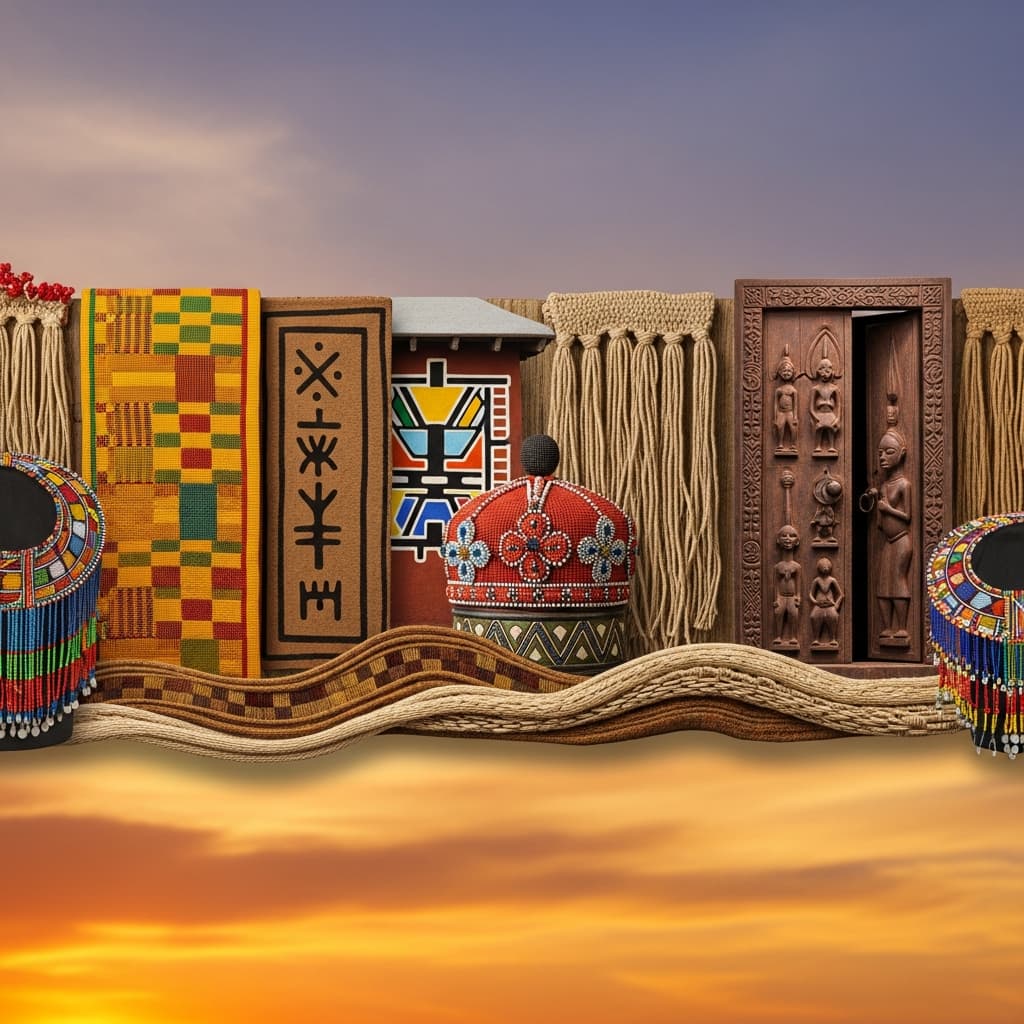
Thread a single red glass bead onto sinew and feel the weight of a Zulu love letter, each color whispering marriage, mourning, or mischief. African... beadwork art is not jewelry. It is language, status, medicine, and memory stitched in glass, seed, and shell. From Maasai collar necklaces signaling warrior rank in Kenya to Yoruba coral-beaded crowns in Nigeria, over 500 ethnic styles sparkle across 54 nations. Whether you’re learning isiZulu through isicholo patterns or shopping Dakar’s Sandaga Market, beadwork art wraps you in the continent’s coded brilliance.
Hand-strung on fiber, encoded with geometry, worn in birth, courtship, and burial beadwork birthed global fashion, powers $100 million tourism, and guards UNESCO heritage. Let’s string the story bead by bead.
Ancient Gleam: Origins in Trade and Ritual (10,000 BCE – 1000 CE)
Beadwork begins with nature. Ostrich eggshell disks (South Africa, 40,000 BCE) pierce for necklaces early status. Sahara cowrie shells (5000 BCE) trade as currency and fertility charms. Egyptian faience (3000 BCE) glazes turquoise for pharaohs.
Indian Ocean trade (800 CE) floods Swahili coasts with Venetian glass Millefiori “thousand flowers” inspire Kamba waist belts. Great Zimbabwe (11th century) strings carnelian for royal regalia. Akan gold beads cast sankofa birds wisdom symbols.
Materials & Meaning: The Bead Code
- Glass: Czech/Venetian imports red (life), white (purity).
- Seed: Job’s tears, palm nut natural rhythm.
- Shell: Cowrie (wealth), conus (protection).
- Metal: Brass tubes (prestige), silver disks (healing).
- Fiber: Sinew, raffia, cotton body canvas.
Geometry speaks: Triangles (male), squares (female), zigzags (journey), diamonds (fertility).
Crafting Process: From Trade to Talisman
A bead artist often women follows ritual.
1. Sourcing: Haggle in Kumasi for Czech seeds.
2. Sorting: By color, size, shine diviner approves.
3. Stringing: Loom for panels, needle for 3D.
4. Encoding: Zulu love letter black (regret), green (hope).
5. Finishing: Oil for sheen, smoke for blessing.
6. Activation: Worn in dance beads “sing” with movement.
Taboos: Unmarried girls avoid red (seduction); beads never touch ground.
Regional Brilliance: A Beadwork Atlas
East Africa: Warrior & Wedding
Kenya/Tanzania: Maasai enkarewa collars age-set colors. Samburu mporo headbands.
Southern Africa: Love Letters & Legacy
South Africa: Zulu isicholo married women’s hats. Ndebele idzila aprons geometric grief.
West Africa: Royal & Ritual
Nigeria: Yoruba ileke waist beads fertility. Ghana: Krobo powder-glass disks.
Central Africa: Prestige & Power
Cameroon: Bamileke elephant masks bead encrusted. DRC: Kuba nnaam chief belts.
North Africa: Nomad & Knot
Morocco: Berber amber evil eye wards. Mauritania: Tuareg silver inlays.
Why Beadwork Art Matters Today
Beadwork earns $150 million yearly Maasai co-ops employ 5,000 women. Tourism: Zanzibar bead tours draw 50,000. Fashion: Vlisco prints, Stella McCartney bead runs.
Women lead: Ndebele Esther Mahlangu paints BMWs. Education: Cape Town bead schools train 300 youth. Sustainability: Recycled plastic beads. As Vogue reports, beadwork shapes global runways.
Beadwork teaches language Zulu color codes encode grammar. It heals Krobo puberty rites build confidence.
Hands-On Guide: String, Learn, Wear
Start simple. Watch Maasai bead loom YouTube. Buy Krobo kit ($20). Travel? Nairobi Maasai Market (Tuesday), Accra bead village.
String ethically: Source from Krobo co-ops. Pair with language decode isicholo in isiZulu. Use Bead Tool app.
How Malegado Threads Beadwork into Fluency
Malegado turns beads into syllabus. Study French for Bamileke elephant lore. Learn Portuguese for Angolan ovimbundu patterns. Tutors decode sankofa in Twi. Forums share mporo charts. Explore trade’s bead routes via this Malegado Swahili civilization guide. Translate color codes across tongues with our French-Portuguese translator article. From virtual loom sessions to love-letter lessons, Malegado strings your path.
The Beads Still Speak
African beadwork art is conversation one red seed, one cowrie curve, one Zulu diamond, and identity shines. Start threading on Malegado today. The ancestors are counting.