
Carving the Unseen: The Sacred Craft of African Mask Making
African mask making transforms wood into spirit vessels. Journey through chi wara antelopes, kifwebe stripes, and gelede headdresses that dance with ancestors.
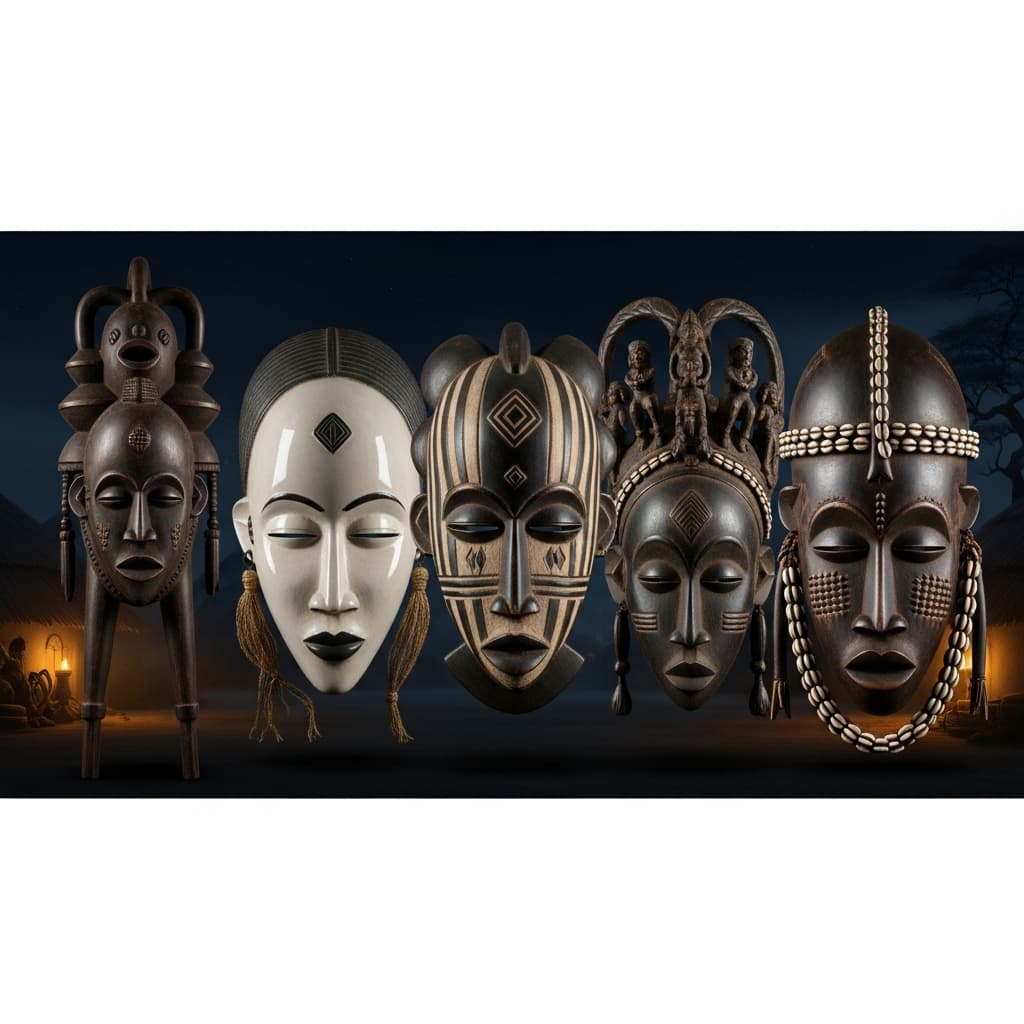
Feel the blade bite into fresh iroko wood as a Dogon carver whispers prayers, releasing curls that smell of earth and ancestor breath. African mask making is not hobby. It is communion, protection, and transformation forged in fire and faith. From Bamana chi wara antelope crests in Mali to Makonde lipiko demon helmets in Tanzania, over 1,000 ethnic traditions sculpt masks across 54 nations. Whether you’re learning Yoruba through gelede praise or joining a Punu funeral in Gabon, mask making pulls you behind the wood into the spirit realm.
Hand-carved with adze and knife, painted with clay and blood, adorned with raffia and cowrie, masks serve poro initiation, egungun ancestor calls, and ndlamu warrior display. They birthed Cubism, power global auctions, and guard UNESCO heritage. Let’s follow the chisel through ritual and revelation.
Ancient Whispers: Origins of the Mask (7000 BCE – 1000 CE)
Masking begins in mystery. Tassili n’Ajjer rock art (Algeria, 5000 BCE) shows horned figures early spirit vessels. Nok terracotta (Nigeria, 500 BCE) fires miniature heads with tribal scars mask prototypes. Egyptian gold Tutankhamun (1323 BCE) blends falcon and human for afterlife.
Dogon (Mali, 10th century) carve kanaga with double crossbeams cosmic ladder to Amma. Yoruba gelede honors Iyami women’s power with superstructure headdresses. Fang reliquary masks guard bone bundles in Gabon forests.
Ritual Forge: The Making Process Step-by-Step
A carver often nyamakala caste follows sacred protocol.
1. Tree Selection: Consult diviner; fell iroko (spirit wood) at new moon.
2. Roughing: Adze shapes face heart-shaped for Punu, plank for Bwa.
3. Detailing: Knife carves eyes, scars, mouth bulging for power, serene for beauty.
4. Patina: Rub with palm oil, smoke over fire, apply libations (blood, beer).
5. Adornment: Raffia skirt, cowrie eyes, feather crown, bead lips.
6. Activation: Bocio ceremony griot sings mask “awake”; it joins dance.
Taboos: Women barred from carving (some exceptions); tools never lent.
Materials & Symbolism: Language of the Mask
- Wood: Iroko (durability), sese (light for dance).
- Pigment: White kaolin (spirits), red camwood (life), black charcoal (mystery).
- Additions: Nails (nkisi activation), mirrors (soul trap), horns (fertility).
Geometry speaks: Stripes (kifwebe aggression), circles (guro harmony), triangles (dan judgment).
Regional Masters: A Mask-Making Atlas
West Africa: Initiation & Satire
Mali: Bamana chi wara bamboo antelope. Côte d’Ivoire: Guro zamble hybrid beast. Liberia: Dan deangle smooth beauty.
Central Africa: Guardians & Grace
Gabon: Fang ngil stark justice. DRC: Songye kifwebe striped fury.
East Africa: Helmets & Horror
Tanzania: Makonde lipiko scarified demons. Angola: Chokwe mwana pwo ideal woman.
Southern Africa: Beads & Morality
Malawi: Gule Wamkulu nyau chewa characters. South Africa: Xhosa bead masks.
North Africa: Veils & Paint
Morocco: Gnawa minimal face dots. Algeria: Tuareg tagelmust cloth.
Why Mask Making Matters Today
Masks earn $50 million yearly Punu sells for $500,000. Tourism: Dogon sigi (every 60 years, next 2029) draws 10,000. Contemporary: Romuald Hazoumè jerrycan masks protest oil.
Women carve: Adjoua Kouassi breaks Senufo taboo. Education: Ouagadougou workshops train 200 youth. Restitution: France returns 26 masks (2021). As The Met explains, masks birthed modernism.
Masks teach language Adinkra on Ghanaian masks encode Akan. They heal kifwebe treats social discord.
Hands-On Guide: Carve, Dance, Honor
Start safe. Sketch deangle curves. Watch Makonde carving on YouTube. Travel? Korhogo poro (Côte d’Ivoire, April), Bamako mask market.
Carve ethically: Buy iroko from co-ops, learn from Lassina Coulibaly. Pair with language chant Yoruba oriki during gelede. Use Google Arts 3D masks.
How Malegado Sculpts Mask Making into Fluency
Malegado turns blade into textbook. Study French for Dan deangle lore. Learn Portuguese for Chokwe mwana pwo. Tutors decode chi wara in Bambara. Forums share kanaga blueprints. Explore trade’s mask routes via this Malegado Swahili civilization guide. Translate carving terms across tongues with our French-Portuguese translator article. From virtual poro sessions to symbol-through-sculpture lessons, Malegado carves your path.
The Mask Still Breathes
African mask making is spirit in wood one kanaga beam, one ngil stare, one lipiko scar, and the unseen becomes seen. Start carving on Malegado today. The ancestors are watching.