
Carving the Spirit: The Timeless World of African Sculpture
African sculpture breathes spirit into wood, bronze, and stone. Discover Benin bronzes, Dogon doors, and Shona flows that shaped art worldwide.
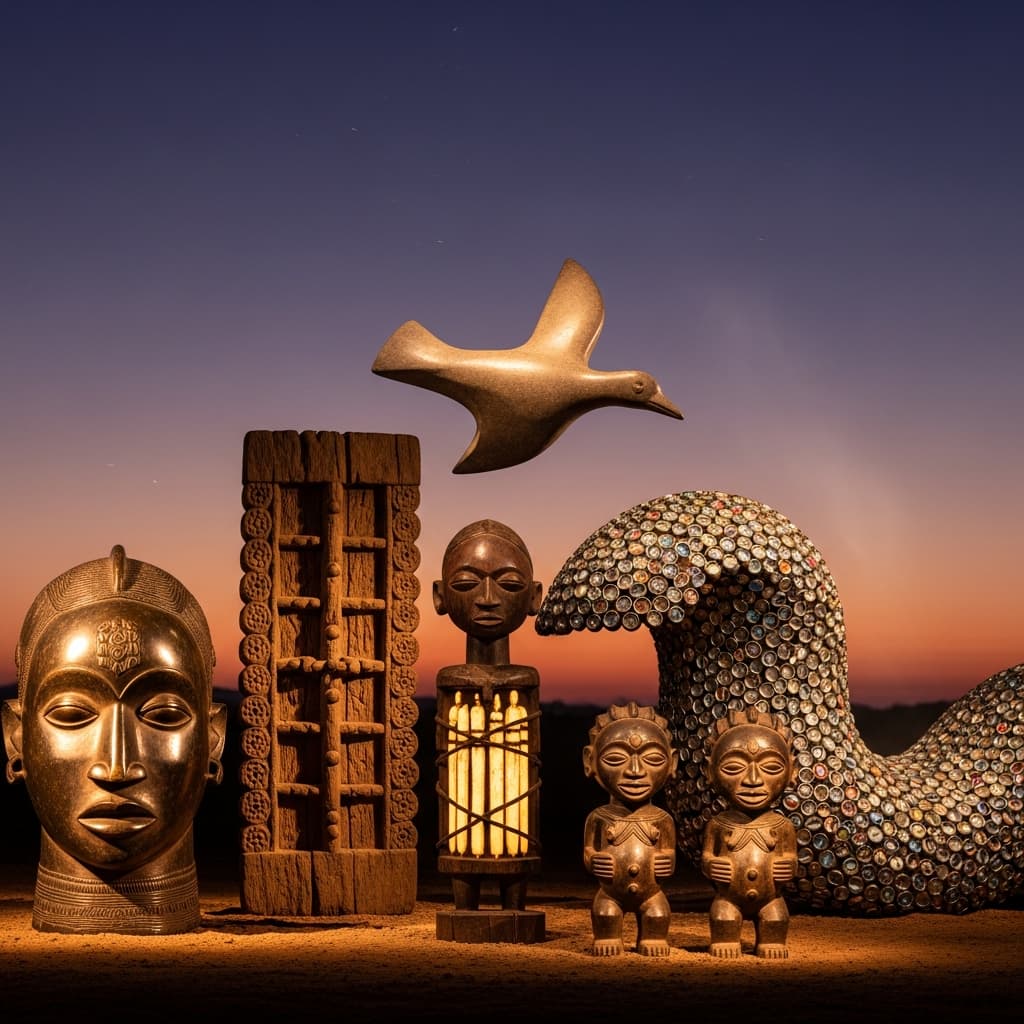
Imagine running your fingers over a smooth, ebony Senufo figure, its elongated form radiating calm power, or standing before a towering Dogon granary door where carved ancestors guard the harvest. African sculpture is not decoration. It is presence, protection, memory, and voice. From the terracotta heads of ancient Nok to the bottle-cap tapestries of El Anatsui, these works span 77,000 years and over 3,000 cultures. Whether you’re learning Yoruba through Ifá divination boards or planning a gallery tour in Lagos, African sculpture pulls you into a dialogue with the past, present, and unseen.
Crafted from wood, ivory, bronze, clay, and stone, these sculptures serve rituals, royalty, and rebellion. They inspired Picasso’s Cubism, fueled global museum collections, and now drive a booming contemporary art market. Let’s walk through the chisel marks of history and meaning.
The Ancient Roots of African Sculpture: A 77,000-Year Legacy
The story begins in South Africa’s Blombos Cave, where 77,000-year-old ochre blocks bear cross-hatch carvings early abstract art. By 500 BCE, Nigeria’s Nok culture fired expressive terracotta heads with triangular eyes and elaborate hairstyles, hinting at portraiture. Egypt’s pharaonic stone statues set global standards for monumentality.
Medieval kingdoms mastered metal. Ife (12th–15th century) cast near-life-size zinc-brass heads with scarification and serene realism. The Benin Kingdom (13th–19th century) used lost-wax bronze for plaques narrating battles and court life. Great Zimbabwe (11th–15th century) carved soapstone birds symbolizing royal authority. Kongo nkisi power figures, studded with nails, channeled spirits for healing or justice.
Colonial looting stripped palaces thousands of Benin works now sit in London and Berlin. Independence sparked revival: Nigeria’s Oshogbo school fused myth with modern form. UNESCO now protects sites like Djenné’s mud architecture, where sculpture meets building.
Materials, Techniques, and Symbolic Language
African sculpture speaks through substance. Wood (iroko, ebony) dominates for masks and figures, chosen for grain and spirit. Bronze and brass via lost-wax casting create royal permanence. Terracotta fires ancestral heads. Ivory carves intricate combs and horns. Stone (soapstone, serpentine) yields Shona’s flowing forms. Contemporary artists repurpose metal, plastic, and fabric.
Techniques blend skill and ritual. Carvers consult diviners before felling trees. Stylization rules: enlarged heads signify wisdom, scarification marks identity. Asymmetry and abstraction convey energy over realism. Patina from wear, blood, or oil adds power. A Fang reliquary figure guards bones; its polished heart-shaped face reflects moonlight and memory.
Regional Masters: A Sculptural Atlas of Africa
Each region sings in its own medium and message.
West Africa: Ancestors, Royalty, and Everyday Power
Nigeria’s Yoruba ibeji twin figures, carved after loss, receive offerings to balance fate. Benin bronzes depict warriors and leopards. Dogon (Mali) doors layer hermaphroditic figures for cosmic order. Bamana chi wara antelope headdresses celebrate farming. Akan goldweights cast proverbs in miniature brass.
Central Africa: Guardians and Reliquary Art
Congo’s Luba female bowls hold divination chalk, embodying leadership. Fang (Gabon) reliquary figures, with muscular calm, watch over ancestor bundles. Kuba cups weave raffia into sculptural elegance. Songye nkishi bristle with nails and feathers for spirit activation.
East Africa: Trade, Faith, and Abstract Grace
Ethiopia’s Lalibela rock-hewn churches are monolithic sculptures. Swahili mihrab niches blend coral and Arabesque. Makonde (Tanzania) “tree of life” carvings twist family into surreal ebony. Maasai fertility dolls use beads and leather.
Southern Africa: Stone, Spirit, and Modern Flow
Zimbabwe’s Shona sculpture, begun in the 1960s, sees artists like Henry Munyaradzi polish serpentine into fluid birds and faces now a $30 million industry. San engraved stones mark sacred sites. Ndebele wall reliefs sculpt geometry in mud.
North Africa: Pharaohs to Islamic Minimalism
Egypt’s Colossi of Memnon guard eternity. Morocco’s zellige tilework sculpts geometry in 3D. Coptic wood screens carve crosses with ancient motifs.
Why African Sculpture Matters Today
· Sculpture fuels pride and profit.
· Nigeria’s art market rivals London’s.
· Shona works grace the UN headquarters. Contemporary giants like El Anatsui (Ghana) weave liquor bottle caps into metallic waterfalls, selling for millions.
· Yinka Shonibare’s mannequins critique empire with Dutch wax cloth.
Restitution gains ground: Germany returned 22 Benin bronzes in 2022.
· Museums co-curate with source communities. Youth learn carving in Mali’s Dogon villages, preserving skills.
· As The Metropolitan Museum notes, African sculpture birthed modernism Picasso owned Fang masks.
Sculpture teaches language: Adinkra symbols encode Akan proverbs; nsibidi signs whisper Igbo secrets. It heals trauma post-apartheid memorials use Shona stone.
Hands-On Guide: Touch, Learn, and Collect
Start local.
· Visit Brooklyn Museum’s African galleries for handling sessions.
Sketch chi wara curves.
· Watch YouTube lost-wax demos from Benin.
· Travel? Tour Lagos’ Nike Centre for carving workshops.
· Haggle ethically at Marrakesh’s souks for Tuareg crosses.
Collect smart:
· Buy from cooperatives like Zimbabwe’s Tengenenge.
· Verify provenance.
· Learn care oil wood, dust bronze gently.
Pair with language:
· Yoruba terms for ibeji parts improve fluency.
· Use apps like Artsy for virtual auctions.
How Malegado Sculpts Culture into Learning
· Malegado makes sculpture your syllabus.
· Study French to read Dogon cosmology texts.
· Learn Portuguese for Angolan nkisi rituals.
· Tutors decode Ifá tray symbols in Yoruba. Forums share Shona polishing tips.
· Explore trade’s role in Swahili carvings via this Malegado Swahili civilization article.
· Translate art terms across borders with our French-Portuguese translator guide.
· From virtual museum tours to language-through-symbol lessons, Malegado carves your path.
Let the Stone Speak
African sculpture is conversation between carver and spirit, past and future, maker and viewer. One ibeji smile, one nkisi nail, one Shona curve, and history breathes. Start your dialogue on Malegado today. The ancestors are waiting.