
Behind the Mask: The Mystical Power of African Masks
African masks transform wearers into ancestors and spirits. Journey through gelede, kifwebe, and ngil traditions that shaped art and ritual worldwide.
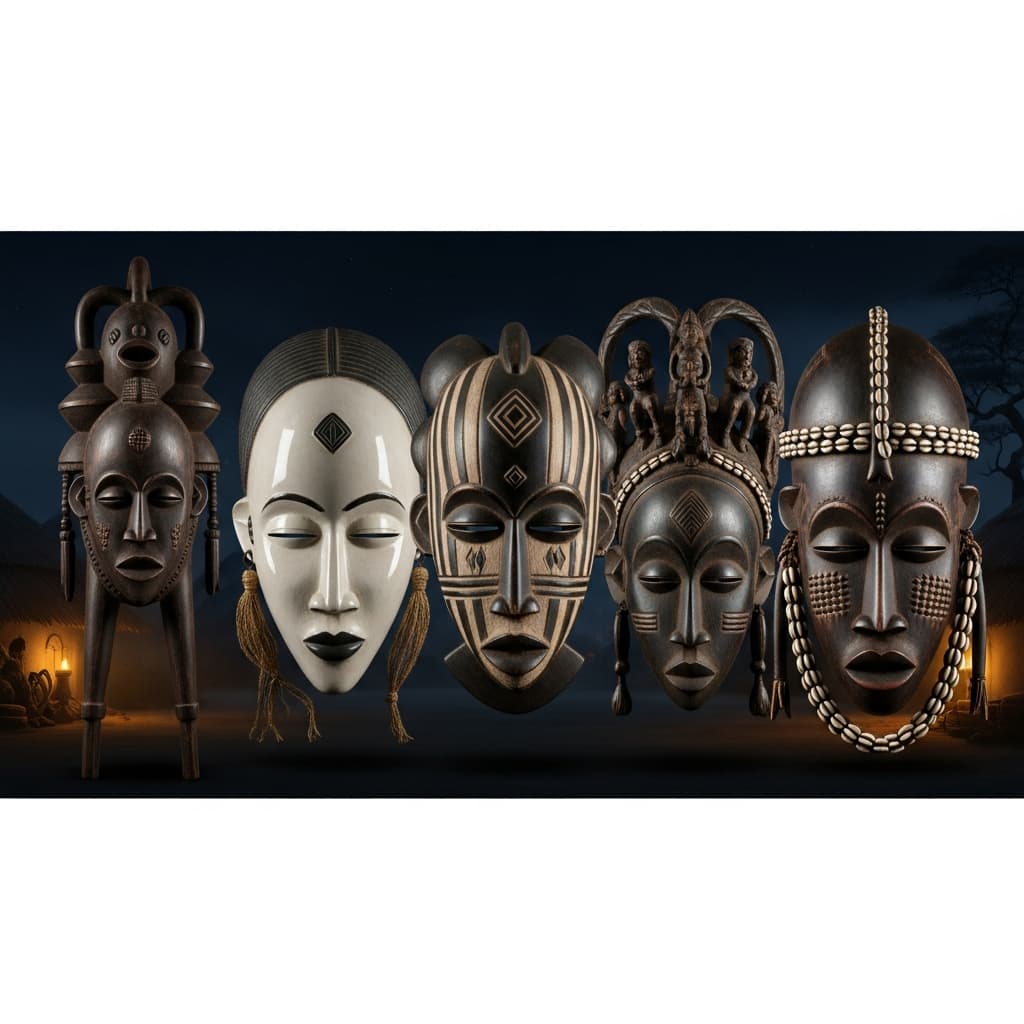
Step into a moonlit village clearing where a Dogon mask towers on stilts, its wooden face painted white with cowrie eyes staring into the spirit world. Drums thunder, and the wearer leaps, no longer human but a bridge to ancestors. African masks are not costumes. They are vessels of transformation, identity, and storytelling. From the fierce Bwa plank masks of Burkina Faso to the delicate Punu maiden faces of Gabon, over 1,000 ethnic traditions craft these works across the continent. Whether you’re learning Lingala through ndombolo dance or visiting a Benin festival, African masks pull you behind the wood and into the soul of culture.
Carved from a single log, adorned with beads, feathers, and raffia, masks serve initiation, healing, funerals, and harvest. They inspired Picasso, Matisse, and Basquiat, and now star in global auctions and contemporary performance. Let’s lift the veil on their history, meaning, and magic.
Ancient Origins: The Birth of African Masks
Mask-making traces to 7000 BCE. Rock art in Algeria’s Tassili n’Ajjer shows horned figures in ritual dance. By 500 BCE, Nigeria’s Nok culture fired terracotta heads early mask prototypes. Egypt’s gold Tutankhamun funeral mask (1323 BCE) blended human and divine.
West African kingdoms elevated the form. Senufo (Côte d’Ivoire) masks honored founders in Poro initiations. Bamana (Mali) chi wara antelope headdresses celebrated agriculture. Yoruba gelede honored women’s spiritual power with elaborate superstructures. Central Africa’s Fang and Punu masks guarded ancestor relics. East Africa’s Makonde lipiko helmets twisted realism into surrealism.
Colonial collectors looted thousands many now in Paris or New York. Independence revived traditions: Oshogbo artists fused myth with modernism. UNESCO safeguards Dogon mask dances as living heritage.
Materials, Craft, and Spiritual Design
Masks begin with a tree carvers consult spirits before cutting. Wood (light sese for mobility, dense ebony for permanence) forms the core. Raffia skirts enable movement. Cowrie shells, beads, feathers, and metal add status and sound. Pigments from clay, charcoal, and plants carry symbolism: white for spirits, red for life, black for mystery.
Design distorts for power. Elongated faces, bulging eyes, and geometric scars convey otherworldliness. Horizontal plank masks (Bwa) span three feet to mimic horizons. Helmet masks (Punu) fit over the head for graceful dance. Combination masks layer human and animal kifwebe (Songye) stripes suggest leopard ferocity.
Patina matters: libations of blood, palm oil, or beer age the surface, feeding the mask’s spirit. A mask is “born” in ceremony, “fed” during use, and “retired” when power fades.
Regional Icons: A Mask Map of Africa
Each region crafts its signature.
West Africa: Initiation and Social Balance
Guro (Côte d’Ivoire) masks blend human, hyena, and antelope for zamble performances. Dan (Liberia) racing masks with tubular eyes judge disputes at high speed. Bwa butterfly plank masks soar in harvest rites. Yoruba egungun layer cloth to embody ancestors. Igbo maiden spirit masks glow with white kaolin for beauty contests.
Central Africa: Ancestors and Cosmic Order
Fang ngil masks, with stark white faces, enforced justice in Gabon. Punu okuyi maidens, with glossy black hair, danced on stilts at funerals. Kuba mwaash aMbooy royal masks used palm cloth and beads for prestige. Luba half-figures guarded secrets.
East Africa: Helmets and Transformation
Makonde (Tanzania) lipiko helmets scarify faces into demons for mapiko coming-of-age dances. Chokwe (Angola) mwana pwo fertility masks mimic ideal womanhood. Luo (Kenya) animal masks taught ecology.
Southern Africa: Beads and Minimalism
Ndebele (South Africa) bead masks signaled marriage. Venda domba initiation used abstract wood forms. Tsonga shingwedzi masks combined carving and fabric.
North Africa: Veils and Performance
Tuareg tagelmust veils function as masks, hiding identity. Gnawa (Morocco) trance dancers wear minimal face paint.
Why African Masks Matter Today
Masks drive culture and cash. Benin’s Gèlèdè festivals draw tourists. Makonde carvings fund Tanzanian schools. Contemporary artists like Romuald Hazoumè (Benin) repurpose jerrycans into satirical masks, selling for $100,000+. Willis “Wangechi Mutu” collages echo mask distortion.
Restitution accelerates: France returned 26 works in 2021.
· Museums co-create exhibits with communities.
· Youth learn carving in Mali countering urban drift.
· As The British Museum explains, masks birthed Cubism and Expressionism.
Masks teach language:
· Adinkra symbols on Ghanaian masks encode Akan wisdom.
· Nsibidi signs whisper Igbo philosophy.
· They heal Bwa masks treat social discord.
Your Guide: See, Wear, and Understand
Start close.
· Visit Chicago’s Field Museum for interactive mask displays.
· Sketch kifwebe stripes.
· Watch YouTube egungun performances.
· Travel? Join Mali’s Dogon sigi festival every 60 years (next: 2029).
· Buy from cooperatives avoid airport fakes.
Try on culture:
· Many festivals let visitors dance (with permission).
· Learn basic gelede steps online.
· Pair with language chant Yoruba praise in bata rhythm.
· Use apps like Google Arts for 3D mask tours.
How Malegado Unmasks Culture for Learning
Malegado turns masks into lessons. Study French to follow Dan mask lore in Abidjan. Learn Portuguese for Angolan mwana pwo poetry. Tutors decode chi wara symbolism in Bambara. Forums share carving videos. Explore trade’s mask influence via this Malegado Swahili civilization guide. Translate mask names across tongues with our French-Portuguese translator article. From virtual dance-alongs to symbol decoding, Malegado reveals the face behind the mask.
See the Unseen
African masks are portals step through one Punu gaze, one Bwa plank, one Makonde scar, and the spirit world opens. Start your transformation on Malegado today. The mask is waiting.